403 Forbidden
ERR_WEB_NGX_403

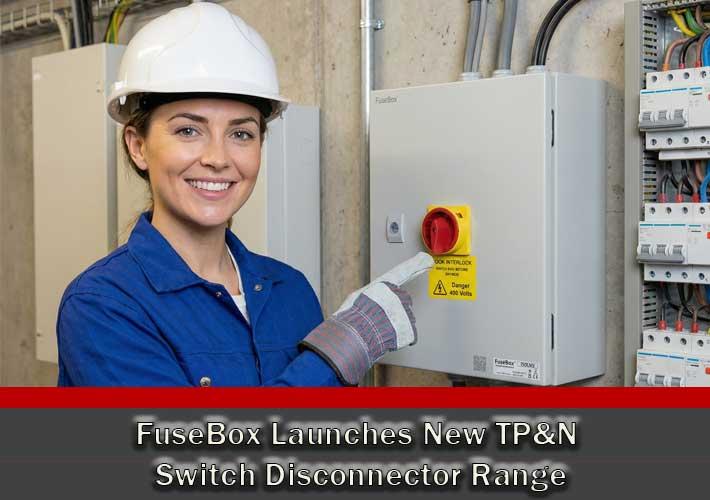
FuseBox has expanded its industrial circuit protection offering with two new metal-bodied isolator solutions: a TP&N switch disconnector (isolator) and a TP&N fused switch, both housed in robust IP65 steel enclosures with a door interlock handle.

In simple terms, these products give you safe, obvious isolation at the point of use, with the fused model also providing integrated fuse protection for mixed loads. If you’re specifying switch disconnectors, isolators, switch fuses, or fused switches for plant rooms, workshops, external plant, small industrial units, or commercial distribution, this range is built to make the install straightforward and the isolation procedure unambiguous.
Both products are TP&N (3 pole + neutral) solutions designed for effective power disconnection and secure isolation. FuseBox lists an AC-23A duty rating across multiple current options, making them well suited to switching and isolating higher-current equipment under load conditions commonly found in commercial/industrial environments.
That spread of current ratings makes it easier to standardise on one enclosure style across multiple duties—whether you’re isolating a small sub-board feed, a rooftop unit, a commercial extractor, or a piece of workshop machinery.

Switch disconnector / isolator: Use this where you need a dedicated means of isolation and lock-off, but overcurrent protection is provided elsewhere (for example upstream in a distribution board). It’s the classic “local isolator” for safe maintenance and emergency shut-down.
Fused switch: Choose a switch fused option where you want isolation and local fuse protection at the point of use. FuseBox’s fused model combines a rotary isolator with integrated fuse protection, helping protect equipment where reliable overload protection is critical.
Fuse sizing is clearly aligned with the rating: the 32A fused switch is supplied with 10×38 gG fuses, while 63A–100A versions use 22×58 gG fuses.
Both enclosures are large, durable 1.2mm steel with a powder-coated RAL7035 finish, designed to take the knocks and keep their seal in harsher environments.
Key practical features that matter on site:
For environments with temperature swings, FuseBox also specifies an operating temperature range of -25°C to +55°C.
Both products are positioned as compatible with FuseBox Main Switch and TPN consumer units, making them a tidy match for contractors who already standardise on FuseBox boards and protection devices.
If you’re upgrading local isolation on commercial plant or specifying a switch fused solution for protected isolation, this new FuseBox range gives you consistent metal IP65 enclosures, clear lockable switching, and sensible internal space across multiple current ratings.
A switch disconnector (isolator) is used purely to safely isolate a circuit and does not provide overcurrent protection. A fused switch combines isolation with integrated fuse protection, allowing the circuit to be protected locally as well as isolated.
A fused switch is typically used when additional protection is required at the point of isolation, such as for machinery, plant equipment, or sub-circuits where upstream protection may not be sufficient or easily accessible.
Yes. Both the switch disconnector and fused switch are housed in IP65-rated metal enclosures, making them suitable for outdoor use or harsh environments such as plant rooms, workshops, and loading bays.
Yes. The rotary handle can be padlocked in the OFF position, and the door is mechanically interlocked when the switch is ON, helping to support safe isolation and lock-off procedures.
The FuseBox switch disconnector range is available from 32A up to 125A, while the fused switch range covers 32A to 100A, allowing installers to select the correct rating for a wide range of applications.
Yes. The fused switch units are supplied with appropriately sized gG fuses, matched to the selected current rating, helping to simplify specification and installation.
These products are commonly used for local isolation of three-phase equipment such as HVAC systems, motors, commercial machinery, distribution feeds, and external plant.