403 Forbidden
ERR_WEB_NGX_403

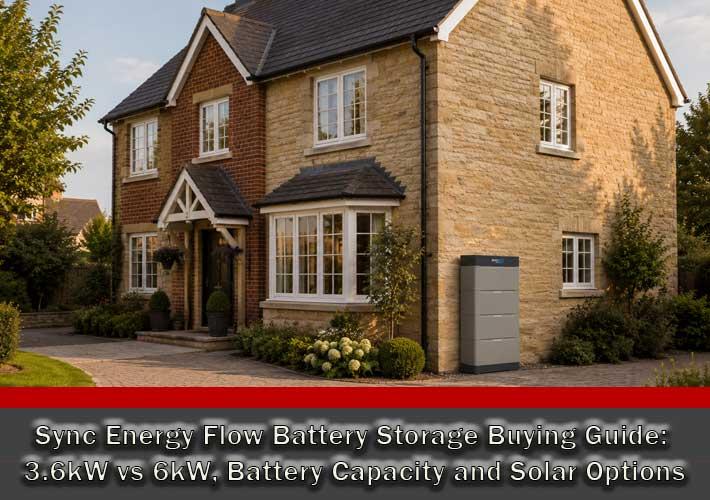
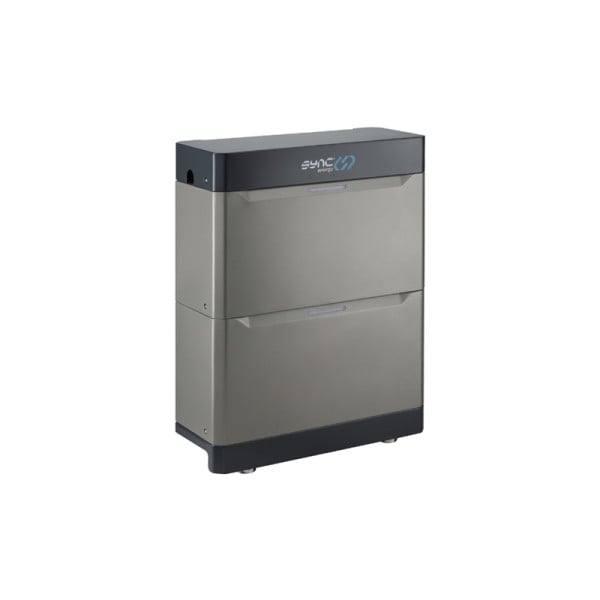
The Sync Energy Flow battery storage range is a modular home energy management system designed to store electricity for use when it is needed most. It can be used with solar panels, without solar panels, or as part of a future-ready installation where solar PV or EV charging may be added later.
This buying guide explains the difference between the 3.6kW and 6kW all-in-one systems, how to choose the correct battery capacity in kWh, when to use the modular battery stack, and whether you need optional accessories such as the solar power diverter.
The most important thing to understand is the difference between kW and kWh. These are often confused, but they describe two different parts of a battery storage system.
For example, a 6kW inverter can deliver more power at once than a 3.6kW inverter, but the amount of stored energy depends on the number of battery modules installed.

For most new installations, choose one of the all-in-one systems first:
Both of the all-in-one system kits can be ordered with 5.12kWh, 10.24kWh or 15.4kWh battery capacities.
If you are building a system from separate components, use the modular listings:
Important: the battery stack on its own is not a complete home battery system. A compatible hybrid inverter is required to charge the batteries, discharge power into the home, or connect the system to solar PV.
Sync Energy Flow is a modular battery storage system for domestic energy management. It allows electricity to be stored in LiFePO4 battery modules and used later, either to reduce peak-rate electricity usage or to store surplus solar energy.
The system can be used in several ways:
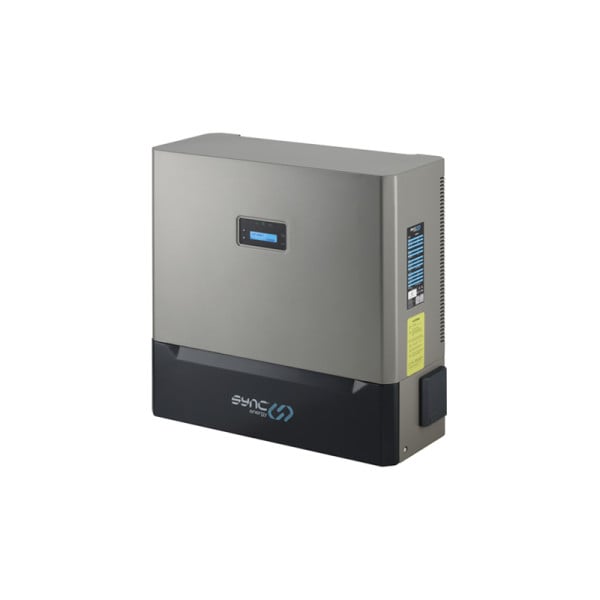
The range includes all-in-one systems, modular battery stacks, standalone hybrid inverters and optional energy management accessories.

There are two main ways to buy Sync Energy Flow.
| Option | What it includes | Best for |
|---|---|---|
| All-in-One System | Hybrid inverter and battery modules in one stacked system | Most new domestic battery storage installations |
| Modular Components | Separate hybrid inverter and separate battery stack | Installer-led builds, system expansion, or more flexible project design |
The all-in-one systems are the simplest route for most customers because they combine the inverter and battery storage into one product family. The modular route is useful when you need to order the inverter and batteries separately, or where an installer is designing the system around specific requirements.
Each Sync Energy Flow battery module provides 5.12kWh of storage capacity. Adding more battery modules increases the amount of energy that can be stored.
| Battery option | Number of batteries | Total capacity | Approx usable capacity at 90% depth of discharge |
|---|---|---|---|
| 5.12kWh | 1 battery | 5.12kWh | 4.61kWh |
| 10.24kWh | 2 batteries | 10.24kWh | 9.22kWh |
| 15.4kWh | 3 batteries | 15.4kWh | 13.86kWh |
| 20.5kWh | 4 batteries | 20.5kWh | 18.45kWh |
The all-in-one systems are available with 1, 2 or 3 batteries, giving up to 15.4kWh of storage. The separate modular battery stack listing also includes a 4-battery option up to approximately 20.5kWh.
For smaller homes and lighter usage, 5.12kWh or 10.24kWh may be enough. For higher electricity usage, electric heating, EV-ready homes or customers trying to reduce peak-rate grid import, the 15.4kWh option is usually the more serious choice.
The inverter controls how quickly the battery can charge and discharge. This is different from battery capacity.
A 3.6kW inverter can charge or discharge at up to 3.6kW. A 6kW inverter can discharge at up to 6kW and has a higher charging rate. This matters because larger homes often use more than 3.6kW at once, especially when appliances, electric heating, EV charging or hot water loads are running.
| System | Inverter output | Best suited for |
|---|---|---|
| 3.6kW All-in-One | 3.6kW | Smaller homes, lower loads and entry-level battery storage |
| 6kW All-in-One | 6kW | Larger homes, electric heating, EV-ready installations and higher loads |
Important: adding more batteries increases storage capacity, but it does not increase the inverter output. A 3.6kW system with three batteries still has a 3.6kW inverter limit. This means the system may store plenty of energy, but it can only release that energy at up to 3.6kW.
This is why the 3.6kW version is best treated as an entry-level system. It can be a good option for smaller properties and projects where lower output is acceptable, but it becomes limiting if the customer plans to expand battery capacity or run higher household loads.
For most higher-usage homes, the 6kW Sync EV Flow All-in-One Battery Storage System is the better choice as it offers a more future proof solution.
Charging speed is an important buying point, especially for customers using a time-of-use tariff with a short off-peak window.
For example, if your off-peak electricity period is 00:30 to 05:30, that gives a 5-hour charging window.
The basic calculation is:
Inverter charge rate × charging hours = maximum energy charged
| System | Approx charging rate | Maximum charge over 5 hours |
|---|---|---|
| 3.6kW system | 3.6kW | 18.0kWh |
| 6kW system | Up to 5.2kW charging | 26.0kWh |
In simple terms, the 3.6kW version can charge a 15.4kWh battery stack within a 5-hour off-peak window, but it uses most of the available time.
| Battery size | 3.6kW charge time | 6kW system charge time at 5.2kW |
|---|---|---|
| 5.12kWh | Approx 1.42 hours | Approx 0.98 hours |
| 10.24kWh | Approx 2.84 hours | Approx 1.97 hours |
| 15.4kWh | Approx 4.28 hours | Approx 2.96 hours |
These are simplified calculations and do not allow for charging losses, battery management, temperature, charge limits or tapering. However, they show why the 6kW version is more flexible. It can recharge the battery more quickly, leaving more room in the off-peak window for other high-demand loads such as EV charging or electric heating.
This is one of the most important checks before buying a battery storage system.
Many homes have a limited single-phase supply. If several large loads run at the same time, the total demand can become very high.
| Load | Example power | Approx current at 230V |
|---|---|---|
| EV charger | 7.4kW | 32A |
| Sync 6kW system charging | 5.2kW | 23A |
| Electric heating | 8kW to 10kW | 35A to 43A |
| Background load | 1kW | 4A |
In this example, the total demand could be around 21.6kW to 23.6kW, which is approximately 94A to 103A at 230V.
That can be close to, or above, the available supply capacity for some properties.
A 100A main switch in a consumer unit is usually an isolator, not the device that trips for normal overload. RCDs are designed for residual current / earth leakage protection, not normal load management. If the total property demand is too high, the issue may involve individual MCBs or RCBOs, the service fuse, meter tails, consumer unit design, DNO limits or the load management settings on devices such as EV chargers and battery inverters.
Before installing battery storage, solar PV or an EV charger, a qualified electrician should check:
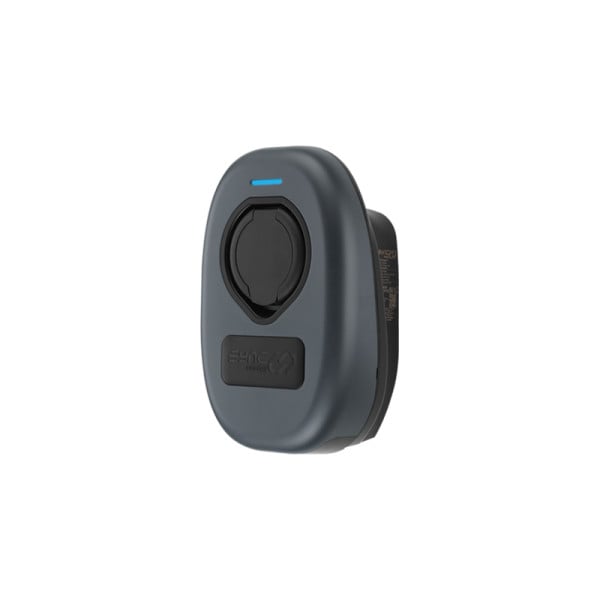
For high-usage homes, load management can be very important. It allows devices such as EV chargers or battery systems to reduce their charging rate automatically when the rest of the house is using a lot of power.

Tesla Powerwall 3 is a premium battery storage system with high output power. On many UK installations, Powerwall 3 can provide much higher discharge power than the Sync Energy Flow 3.6kW or 6kW models.
| Feature | Tesla Powerwall 3 | Sync Energy Flow 6kW + 3 Batteries |
|---|---|---|
| Battery capacity | 13.5kWh | 15.4kWh |
| Discharge power | Approx 11.04kW on many UK installations | 6kW |
| Battery technology | Integrated battery system | Modular LiFePO4 battery stack |
| Solar-ready | Yes | Yes, with hybrid inverter |
| Best suited for | Premium, high-output battery storage | Cost-effective modular battery storage |
The key difference is output power. The Sync 6kW system has strong battery capacity, especially with three batteries, but it does not match the Powerwall 3 for maximum discharge power.
This is why the 3.6kW Sync system should not be presented as a direct Powerwall 3 alternative. It is a good entry-level battery storage system, but it becomes limited as the property demand increases. The 6kW version is the better Sync Energy Flow option for customers comparing against Tesla Powerwall 3.
Choose:
Then select the battery capacity:
This option is best for smaller homes, lighter loads, lower-demand installations and customers who want a lower-cost route into battery storage.
Choose:
Recommended battery capacity:
This is the version to choose for larger homes, electric heating, future EV charging, larger battery storage and customers who want a stronger alternative to entry-level battery systems.
Choose:
This route is best for installer-led designs, system expansion, or projects where the inverter and battery storage need to be ordered separately.
For most higher-usage installations, the 6kW inverter should be considered first. The 3.6kW inverter is better suited to lower-demand properties and smaller projects.
Use:
Adding more batteries increases the amount of energy that can be stored, but it does not increase the inverter output. For example, adding more batteries to a 3.6kW system does not turn it into a 6kW system.
If the customer may need larger loads, EV charging support or faster charging during off-peak periods, it is usually better to choose the correct inverter size at the start.
For a solar-ready battery installation, choose either:
The hybrid inverter is the key component that allows the system to work with solar PV. A solar diverter is not automatically required.
In most battery storage installations, no, you do not automatically need the solar diverter.
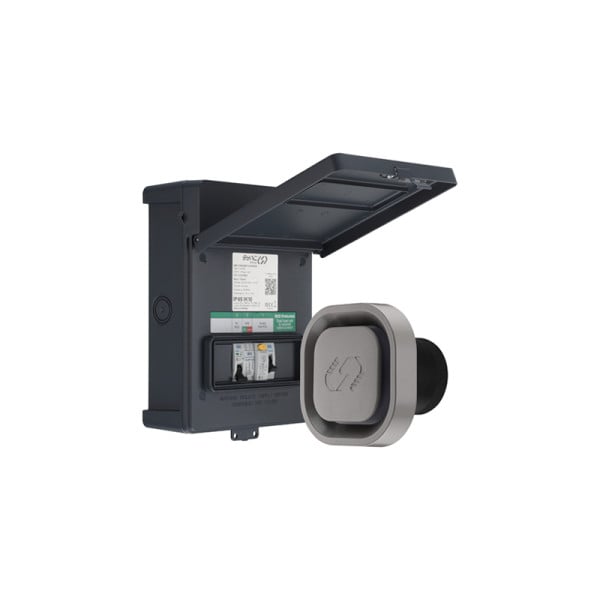
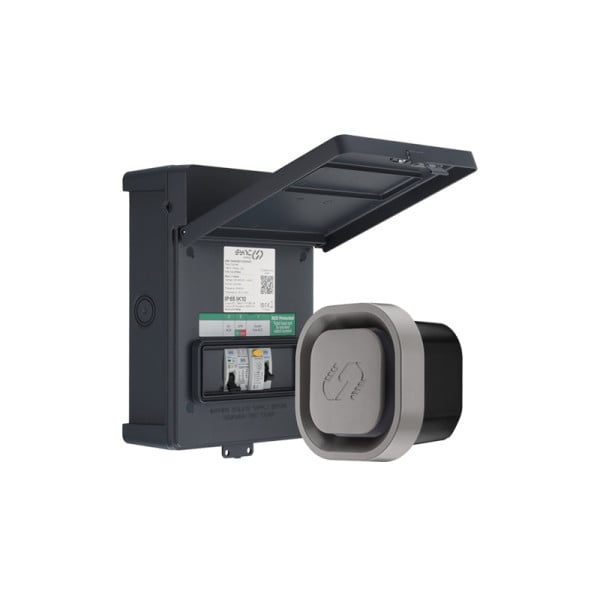
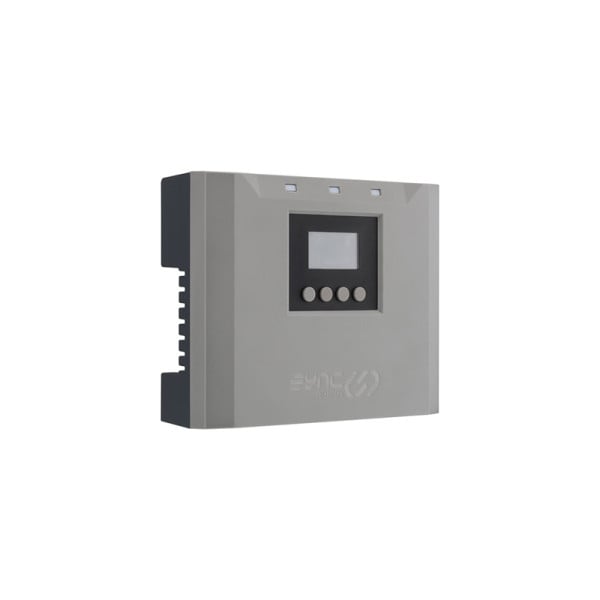
The Sync EV Flow Solar Power Diverter is an optional accessory. It is not the main inverter and it is not required to make the battery system solar-ready.
The priority for most homes should be:
A solar diverter can be useful where the property regularly has surplus solar generation and the customer wants to divert energy to hot water, battery storage or EV charging. However, it is not always the best investment.
If the home already heats water cheaply with gas, diverting solar energy into hot water may not save as much money as using that electricity to avoid peak-rate grid import. Electricity stored in the battery can often be more valuable when it is used later to power the home during expensive peak periods.
The solar diverter should be treated as an optional energy management accessory, not a required part of the core battery storage system.
VAT treatment can depend on how the system is supplied.
For domestic installations, qualifying battery storage installed as part of an energy-saving materials installation may qualify for zero-rated VAT under the current rules. However, supply-only sales of energy-saving materials are normally standard-rated.
This means customers should check VAT treatment carefully with their installer or accountant before ordering. Product prices on a supply-only ecommerce website may not be treated the same way as a full installed domestic energy-saving system.
For customers looking for a Tesla Powerwall 3 alternative, the closest Sync Energy Flow option is:
Sync EV Flow All-in-One 6kW Battery Storage System with 15.4kWh Battery Capacity
This gives a strong balance of battery capacity, inverter output and value. It does not match Tesla Powerwall 3 for maximum discharge power, but it provides more battery capacity than a single Powerwall 3 and may be a more cost-effective option for customers who do not need the full Tesla ecosystem.
The 3.6kW version is not the best Powerwall alternative because the inverter output is much lower. It is still useful as an entry-level option, but customers planning to expand storage or run higher household loads should usually consider the 6kW version first.
| Customer requirement | Recommended option |
|---|---|
| Small home, lower usage, entry-level battery storage | 3.6kW All-in-One System |
| Larger home, higher usage or future EV charging | 6kW All-in-One System |
| Powerwall alternative | 6kW All-in-One with 15.4kWh battery capacity |
| Installer-led modular build | Hybrid Inverter + Modular Battery Stack |
| Adding more storage to a compatible system | Modular Battery Stack |
| Surplus solar hot water or wider energy diversion | Solar Power Diverter, optional only |
For most customers, the decision should be made in this order:
The safest general recommendation is simple: choose the 3.6kW system for smaller, lower-demand homes, and choose the 6kW system for higher-usage homes, EV-ready installations, electric heating and anyone comparing Sync Energy Flow against Tesla Powerwall 3.