403 Forbidden
ERR_WEB_NGX_403

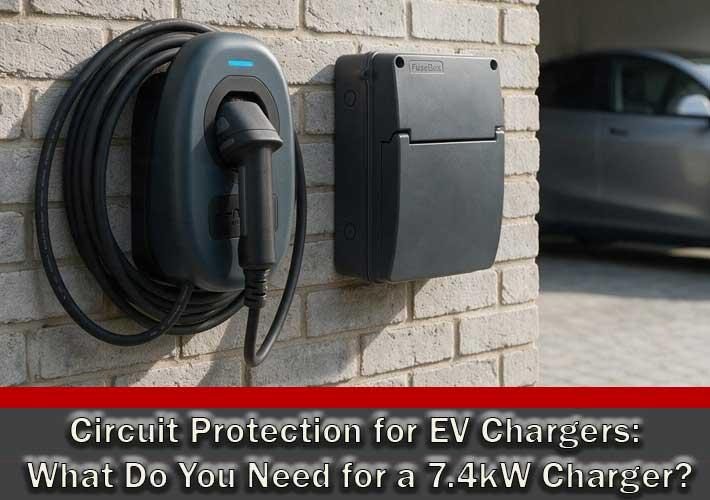
When installing a home EV charger, the charger itself is only part of the job. The circuit protection supplying the charger is just as important. A correctly specified external EV consumer unit or internal distribution unit can provide isolation, overload protection, residual current protection and surge protection for the charger circuit.
This is especially useful when installing chargers such as the Tesla Wall Connector, where the charger may need additional external protection depending on the installation design. Many modern EV chargers include built-in safety features such as open PEN fault protection and 6mA DC leakage detection, but the final circuit still needs to be correctly designed and protected by a qualified electrician.

A domestic EV charger is usually installed on a dedicated final circuit. The exact protection required depends on the charger, cable route, earthing arrangement, installation location and manufacturer instructions.
For most 7.4kW single-phase EV chargers, the key items to consider are:
The easiest way to provide much of this protection is to use a dedicated EV distribution unit or IP-rated consumer unit designed for EV charger installations.
A typical single-phase home EV charger is rated at 7.4kW. In the UK, this is normally based on a 230V single-phase supply and a maximum current of around 32A.
The calculation is:
Power ÷ Voltage = Current
For a 7.4kW charger:
7,400W ÷ 230V = 32.17A
In practice, this is treated as a 32A EV charger circuit. Many chargers are described as 7.4kW / 32A because 230V × 32A gives approximately 7.36kW, commonly rounded to 7.4kW.
That does not automatically mean every installation uses the same protective device. Some manufacturers or installation designs may require a 40A protective device, depending on the charger instructions, cable type, cable size, installation method and derating factors. The final selection should always be made by the installing electrician.
For a standard 7.4kW EV charger, a 32A RCBO is commonly used because the charger load is approximately 32A.
A 40A version may be used where the charger manufacturer’s instructions, cable calculation or installation design require it. The protective device must still protect the cable correctly, so the electrician needs to confirm cable size, installation method, grouping, insulation, ambient temperature and voltage drop.
As a simple guide:
The charger output can also often be limited during commissioning. This is useful where the property supply is limited or load management is required.
An EV charger is a high-value electronic device connected to an outdoor load. For that reason, surge protection is a sensible addition to many EV charger installations.
A Type 2 surge protection device can help protect the charger and associated electronics from transient overvoltages caused by switching events, grid disturbances or nearby lightning activity. It is a relatively small extra cost compared with the cost of replacing a damaged EV charger.
If the charger does not include integrated surge protection, an EV consumer unit or supply isolator with a Type 2 SPD is a practical way to add it.
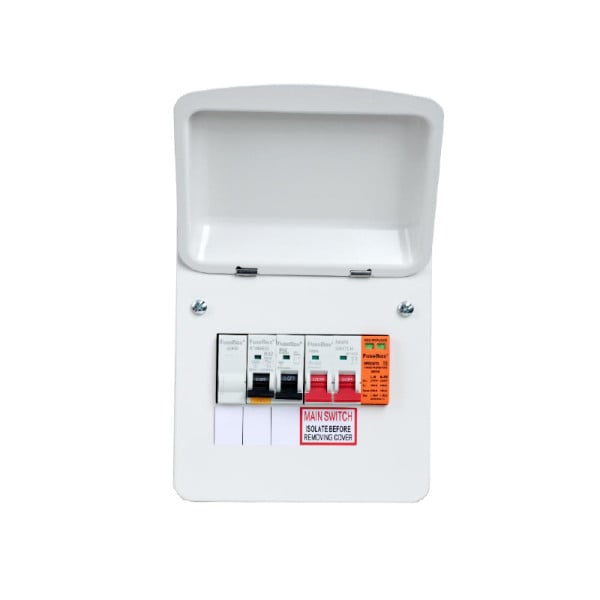
The FuseBox E2PMST2 Meter Supply Isolator with Surge Protection Device and Main Switch is a useful option where surge protection and isolation are required near the incoming supply.
It is supplied with a Type 2 SPD, 100A main switch and DIN rail connector. It is normally installed near the incoming meter position and can provide a safer way to isolate the installation without removing the main incoming fuse.

This product is not a replacement for the EV charger’s final circuit protection, but it can be a useful part of the wider installation where surge protection and incoming isolation are required.
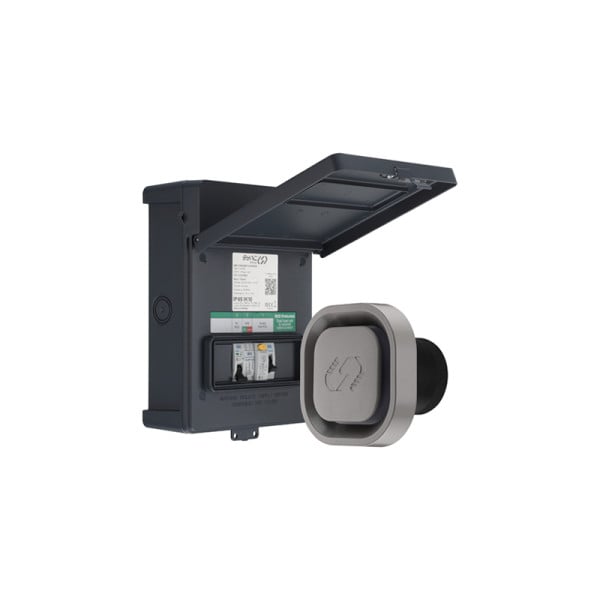
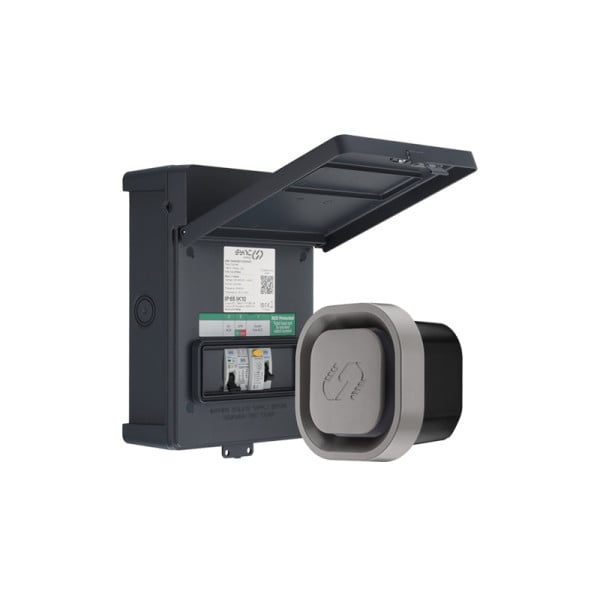
For outdoor or garage installations, the FuseBox AEV32AXBDGY IP65 32A Bi-Directional Mini RCBO + Type 2 SPD Consumer Unit is one of the most useful options.
It is an IP65-rated aluminium consumer unit designed for internal or external use. It includes a 100A main switch with SPD and a 32A bi-directional RCBO, making it a strong choice for many single-phase 7.4kW EV charger installations.
This is often the best option where the EV charger is mounted outdoors, in a garage, or away from the main consumer unit and an IP-rated enclosure is preferred.
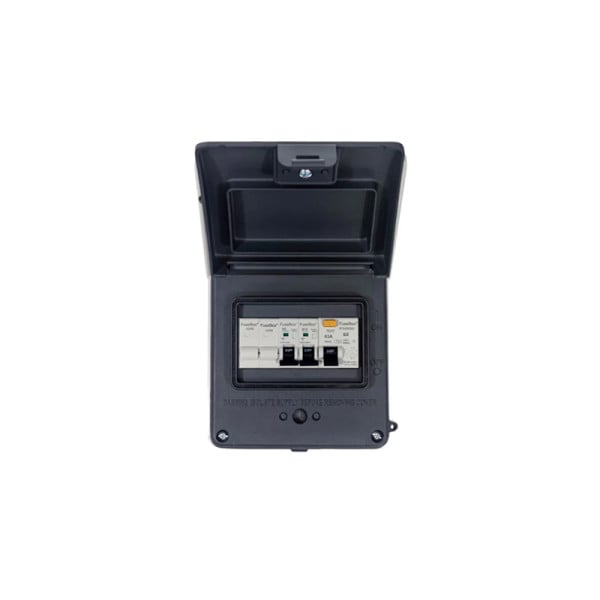
The FuseBox EV32ABDZ EV Distribution Unit is a non-IP-rated metal EV distribution unit for indoor installations.
It includes a 100A main switch and Type 2 SPD with a 32A Type A RCBO. This makes it a practical choice where the EV distribution unit is being installed indoors, such as near the main consumer unit or inside a garage where an IP65 enclosure is not required.

In EV charger installations, Henley blocks, also known as service connector blocks or terminal blocks, are often used to split the meter tails after the electricity meter or main isolator. This allows a separate supply to be taken to a dedicated EV consumer unit, while the existing consumer unit continues to supply the rest of the property.
This can be useful where there is no spare capacity or suitable space inside the existing consumer unit, or where the EV charger is being supplied from its own dedicated distribution unit. A typical arrangement may include the main supply feeding terminal blocks, with separate outgoing tails feeding the main consumer unit and the EV charger consumer unit.

The FuseBox 5 Pole 100A Terminal Blocks are suitable for this type of installation where a secure 100A-rated terminal connection is required. They feature dual screw terminations and a secure cover with wire locking screw, helping provide a neat and reliable connection point for larger conductors.
Important: Henley blocks do not replace the need for correct circuit protection. They are a method of splitting or terminating the supply, not a protective device. The EV charger circuit still needs suitable overcurrent protection, RCD/RCBO protection, surge protection where required, and compliance with the charger manufacturer’s instructions.
Work around meter tails and incoming supply equipment should only be carried out by a qualified electrician. The installer must check the main fuse rating, meter tails, earthing arrangement, maximum demand and DNO requirements before adding an EV charger supply.
The Tesla Wall Connector is a popular home EV charger, but it needs to be installed with the correct external circuit protection for the property. Tesla lists the Wall Connector as suitable for up to 7.4kW / 32A on single-phase 230V installations, and also lists integrated RCD Type A + 6mA DC protection.
However, UK installations also need to consider open PEN fault protection, earthing arrangement and external isolation requirements. This is why a dedicated EV distribution unit or suitable external protection device is often specified as part of the installation.
For Tesla charger installations where additional protection is required, products such as the FuseBox AEV32AXBDGY IP65 EV consumer unit or FuseBox EV32ABDZ EV distribution unit can provide a cleaner, more complete circuit protection solution.
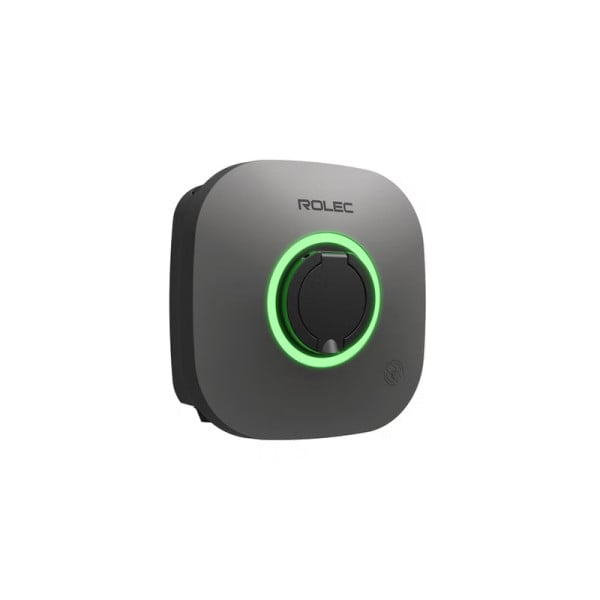
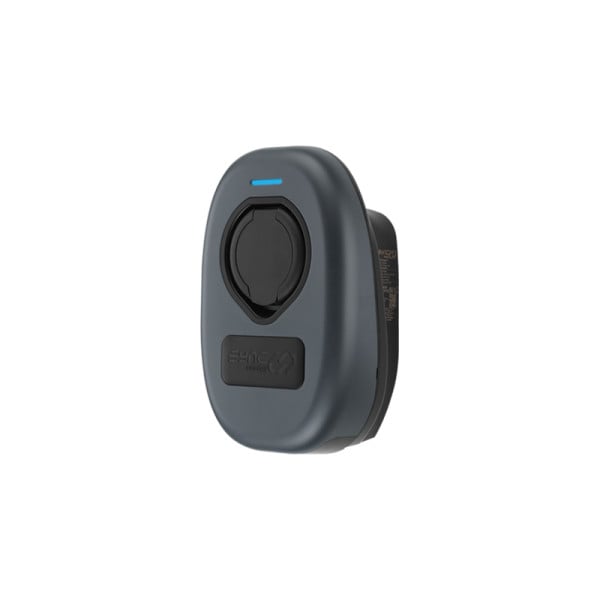
Many modern EV chargers now include features such as open PEN fault protection, Type A RCD protection and 6mA DC leakage detection. For example, the BG Sync EV chargers include integrated open PEN conductor protection, 30mA Type A RCD protection and 6mA DC protection.
Even when these features are built into the charger, the supply circuit still needs suitable overcurrent protection and may still benefit from surge protection. The key is to avoid duplicating unnecessary devices while still meeting the charger manufacturer’s instructions and BS 7671 requirements.
| Installation type | Recommended option | Why choose it? |
|---|---|---|
| Outdoor EV charger installation | FuseBox AEV32AXBDGY | IP65 enclosure, Type 2 SPD and 32A bi-directional RCBO |
| Indoor EV charger circuit | FuseBox EV32ABDZ | Metal EV distribution unit with 100A main switch, SPD and 32A Type A RCBO |
| Incoming supply isolation and SPD | FuseBox E2PMST2 | Useful for meter position isolation and Type 2 surge protection |
| Sync EV charger installation | BG Sync EV chargers | Integrated open PEN protection, Type A RCD and 6mA DC protection built into the charger |
For a 7.4kW EV charger, the load is normally around 32A, so a 32A EV circuit is common. The final protective device must still be selected by the installer based on the charger instructions, cable calculation and installation conditions.
For many domestic installations, a dedicated EV consumer unit with a Type 2 SPD and Type A RCBO is the cleanest approach. For outdoor installations, choose an IP-rated enclosure. For indoor installations, a metal EV distribution unit may be suitable.
If you are installing a Tesla Wall Connector, it is worth checking whether additional open PEN protection, surge protection or external circuit protection is needed. If you are installing a modern charger such as the BG Sync EV range, many of the EV-specific safety features are already built into the charger, but the circuit still needs to be correctly protected.
Always use a qualified electrician for EV charger installations and follow the charger manufacturer’s installation instructions.