403 Forbidden
ERR_WEB_NGX_403

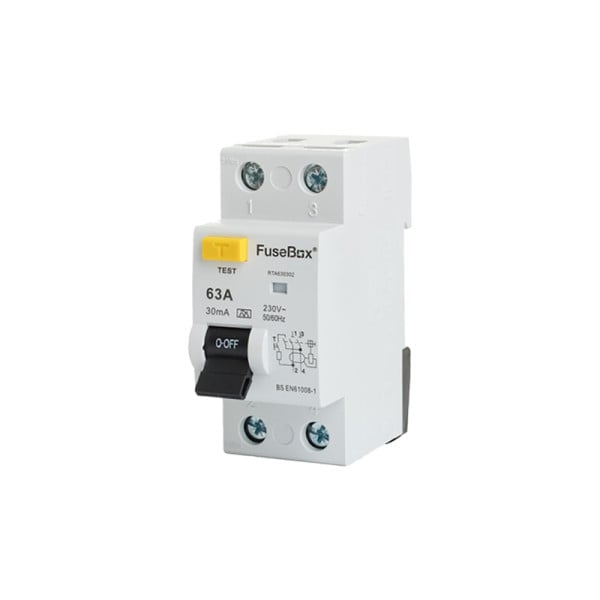
An RCD monitors the flow of electricity in a circuit. In normal operation, the current flowing through the live conductor should equal the current returning through the neutral conductor. If there's a leakage (perhaps through someone receiving an electric shock), the RCD detects this imbalance and rapidly disconnects the supply, typically in less than 30 milliseconds.
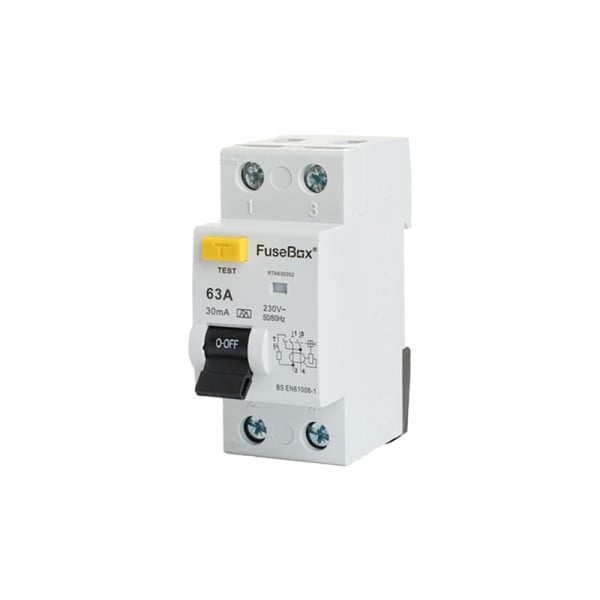
Under the 18th Edition of the Wiring Regulations (BS 7671:2018+A2:2022), RCDs are required for most circuits in domestic and similar installations.
| Type | Current Detection | Applications | Protection Level |
|---|---|---|---|
| Type AC | Alternating current only | Basic household appliances, lighting circuits | Standard protection for older residential installations |
| Type A | AC and pulsating DC currents up to 6mA | Electronic appliances, modern homes, certain EV chargers | Enhanced protection for modern installations |
| Type F | AC, pulsating DC, and high-frequency fault currents | Heat pumps, air conditioning, frequency converters | High protection for variable-speed appliances |
| Type B | AC, pulsating DC, smooth DC, and high-frequency currents | EV charging (no built-in DC protection), solar inverters | Highest protection for specialised installations |
Type AC RCDs are basic and detect only alternating sinusoidal currents. They are suitable for older installations but are no longer recommended under current UK wiring regulations due to their inability to detect DC leakage currents from modern electronic devices. Some RCBOs such as the FuseBox Mini has AC & A type protection in one.
Type A RCDs detect AC and pulsating DC currents. They're the minimum standard for new installations, providing safety for devices with rectifiers like washing machines, dishwashers, and EV chargers with built-in protection.
Type F RCDs are made for appliances using variable frequency drives. They provide protection from AC, pulsating DC, and high-frequency faults, making them ideal for heat pumps, air conditioning units, and some washing machines.
Type B RCDs offer comprehensive protection against all fault current types including smooth DC. They're used in demanding applications like EV charging (without DC fault protection), solar PV systems, and medical installations.
S-type or Selective RCDs are used where RCDs are installed in series. With a short time delay, they prevent upstream tripping, ensuring only the faulty circuit is disconnected. These are common in large domestic or commercial installations.
S-type RCDs are available in various forms like Type A or B, but always with a deliberate delay to allow selective coordination.
According to Regulation 722.531.3.101 of BS 7671:2018+A2:2022, each EV charging point must be protected individually by an RCD of Type A, Type F, or Type B with a rated residual operating current not exceeding 30mA. The RCD must disconnect all live conductors, including the neutral.
For EV charging installations in the UK, there are two main approaches:
For domestic installations with a single charging point, a Type A RCD is typically sufficient and more cost-effective, provided the charging equipment has built-in DC fault current protection. For installations with multiple charging points, a Type B RCD may be required upstream as the combined DC leakage could exceed the safe limit for Type A RCDs.
The decision should be based on the EV charger manufacturer's specifications and the installation requirements. Always consult the equipment documentation and a qualified electrician familiar with the latest UK regulations.
Using the Seren EV charger from Aurora Lighting as an example, this charger features comprehensive safety measures including 30mA AC & 6mA DC integrated RCD protection alongside PEN fault detection. PEN stands for "Protective Earth and Neutral," referring to a combined conductor that serves dual functions in the UK's common TN-C-S (Terra Neutral-Combined-Separated) electrical systems.
PEN fault detection in EV chargers is a UK safety requirement that monitors for dangerous voltage conditions caused by disconnected neutral connections in PME systems, automatically isolating all conductors to prevent electric shock hazards to users and vehicles. PME stands for "Protective Multiple Earthing," the standard earthing arrangement used in most UK homes where the supply neutral is connected to earth at multiple points.
PEN fault detection is a critical safety feature in UK EV chargers that continuously monitors supply voltage. If it detects abnormal voltage conditions (indicating a possible broken PEN conductor), it immediately disconnects all conductors - preventing potentially lethal voltages from appearing on the vehicle's chassis during charging. This protection eliminates the need for installing additional earth rods and ensures compliance with BS 7671 wiring regulations for outdoor electric vehicle charging installations.
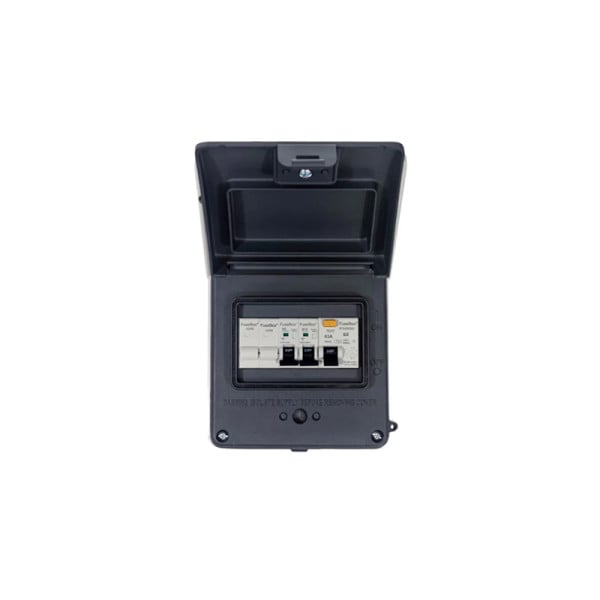
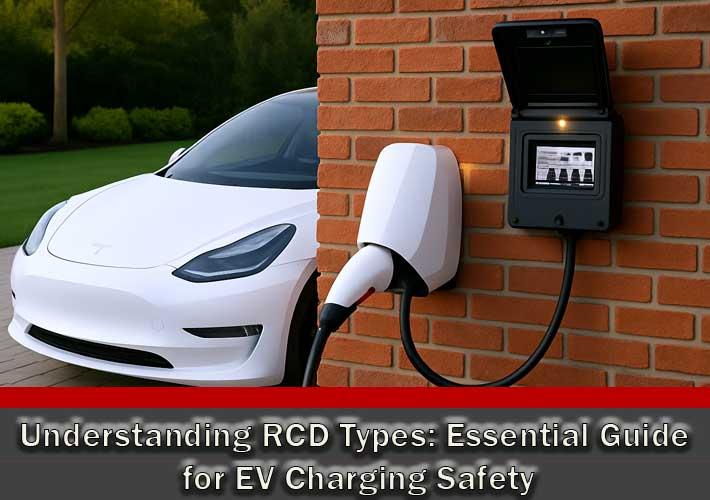
Most EV chargers are installed outside on a wall near to the vehicle. If you're installing this outside you're going to need some outdoor rated circuit protection. The FuseBox EV boards are IP65 rated, made from aluminium with 6 modules and are available with a choice of devices or as empty units. You can order them with a 63A RCD with or without a surge protection device, or with a 100A main switch, SPD and 32A bi-directional RCBO. They're available in dark grey (which looks like black from the images) or white.


The selection of an appropriate RCD depends on the equipment being protected and the specific requirements of the UK wiring regulations. For most new residential applications, Type A RCDs are now the minimum recommendation. For specialised applications, consider:
Always consult with a qualified electrician who is familiar with the latest requirements of BS 7671 to determine the most appropriate RCD type for your specific installation needs.