403 Forbidden
ERR_WEB_NGX_403

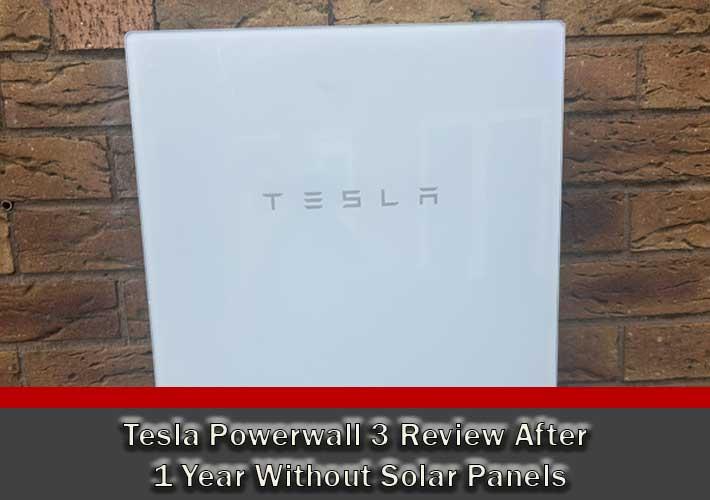
In July 2025, I had a Tesla Powerwall 3 installed at my home in Lancashire. The aim was simple: reduce my electricity bills by storing cheaper off-peak electricity overnight, then using that stored energy during the day when grid electricity is much more expensive.
This was a slightly unusual installation because I did not have solar panels at the time. Most people think of home batteries as part of a solar PV system, but the Powerwall 3 can also be charged from the grid. With the right time-of-use tariff, the idea is to buy electricity cheaply overnight and use it later during peak-rate periods.
Almost one year later, I have reviewed the actual billing data. The honest conclusion is this: without solar, the Tesla Powerwall 3 has not paid for itself yet. It may still become worthwhile when solar panels or an EV charger are added, but as a standalone grid-charged battery system, the savings have been much lower than expected.

My home uses a lot of electricity, especially during winter because the main heating is electric. Before switching to Octopus Energy, my annual electricity usage with EDF was usually around 15,000kWh per year, with electricity bills often close to £400 per month. This is higher than a typical home because of the electric heating system, although my gas costs are relatively low at around £30 per month.
The Powerwall 3 looked like a strong option because it combined several useful features:
The installation cost was £7,719 excluding VAT. VAT was not charged on my installation. I am paying for the system at £214.41 per month over 3 years.
The key question is whether the system saves enough money each month to justify that finance payment.
After installing the Powerwall, I moved onto Octopus Go for import and Outgoing Octopus for export.
The idea was:
This sounds good in theory. The problem is that the financial return depends on three things:
Exporting sounds attractive, but it is only useful if the export rate is high enough. My export rate was previously 15p/kWh, but this later dropped to 12p/kWh. That makes battery export even less attractive.
One of my recent bills showed that I received £30.25 back from exporting electricity to the grid. At first glance, that looks like a useful return.
But this is where the numbers become less exciting. If the battery has been charged from the grid, then exported energy is not free. It was bought first, stored in the battery, and then sold back later. There are also battery losses during charging and discharging.
So the export credit is not the same as profit. If electricity is bought at around 8p/kWh and exported at 12p/kWh, the margin is only a few pence per kWh before losses. Once losses are included, the return is very small.
The better use of stored battery energy is not exporting it. The better use is to power the home during the day and avoid buying electricity at around 29p to 30p/kWh.
I did question this with Octopus, but the issue was not answered clearly at first. At one point, my tariff was changed to one that did not give me the off-peak rates I needed for the battery system to make sense. I then had to get back in touch to have the tariff changed again. This was frustrating because the whole point of the system was to use cheaper off-peak electricity to reduce peak-rate usage.

Another issue appeared during the review. The Powerwall kept changing settings by itself.
I changed the backup reserve to 5%, but it later reverted back to 20%. I disabled export, but export later re-enabled. This meant a large amount of stored energy was being reserved for backup or sent to the grid rather than being used by the home.
After contacting Octopus, they confirmed that my current import and export tariffs did not require Octopus to schedule or control the Powerwall. They confirmed that I could remove the Powerwall from the Octopus app so that it could be managed manually through the Tesla app.
I also found that Octopus-related access was still present inside my Tesla third-party app permissions. I removed this access as well. The system is now set to:
This should allow more of the battery capacity to be used by the house instead of being held back or exported. My concern is that the system was being optimised for export and external scheduling rather than my own self-consumption. For a homeowner, the best financial result is usually to use stored energy in the home to avoid expensive peak-rate import, not to export grid-charged battery energy for a small margin.
Based on my first-year data, I cannot see a clear return on investment from the Powerwall as a standalone battery without solar. The system may still make more sense once solar panels or an EV charger are added, but the battery-only numbers have not worked for my usage so far.

Based on the data reviewed so far, the answer is: not enough.
During one winter billing period, when the electric heating was running, electricity usage was very high. This should have been the best possible scenario for a home battery system because there was plenty of demand for stored energy. Even then, the Powerwall’s saving was limited by its capacity.
A single Powerwall can only shift a certain amount of electricity from cheap overnight periods into peak daytime periods. Once the battery is empty, the house still imports electricity at the expensive day rate.
The Tesla Powerwall 3 has around 13.5kWh of battery capacity. When the backup reserve was being set to 20%, only around 80% of that capacity was available for daily cost saving.
That means the usable capacity was roughly:
13.5kWh × 80% = 10.8kWh per day
On my May/June bill, the rates were:
The price difference was therefore:
30.702p - 8.6205p = 22.0815p per kWh
With a 20% reserve, the maximum theoretical daily saving from one full battery cycle was:
10.8kWh × 22.0815p = £2.38 per day
Over a 31-day month, that is:
£2.38 × 31 = £73.93 per month
That is before allowing for battery losses. Once battery efficiency losses are included, the real-world saving would be lower.
After removing external control, I changed the backup reserve to 0%. At 0% reserve, the full 13.5kWh is available in theory:
13.5kWh × 22.0815p = £2.98 per day
Over a 31-day month, that is:
£92.41 per month before battery losses.
That is useful, but it still does not cover the Powerwall finance cost of £214.41 per month.
To break even against a £214.41 monthly payment, the battery would need to shift approximately:
£214.41 ÷ £0.220815 = 971kWh per month
That works out at:
971kWh ÷ 31 days = 31.3kWh per day
A single Powerwall cannot shift that much energy from one overnight charge cycle. Even at 0% reserve, it can only shift around 13.5kWh per day. That is the main reason why the battery-only payback does not work for my usage, even though the difference between off-peak and peak electricity is substantial.
My annual Octopus electricity usage from 1st July 2025 to 30th June 2026 was 16,464kWh.
My previous EDF annual usage was averaged at around 15,000kWh over the past few years.
So usage did not fall after installing the battery. In fact, it increased. Some of that may be due to behaviour, heating patterns, weather, tariff usage, or battery charging and exporting, but the overall result is clear: the Powerwall did not reduce the total kWh imported enough to make the investment look strong on its own.
This review is specifically about a Powerwall 3 installed without solar panels. The Powerwall 3 has a built-in hybrid inverter, so solar panels can be added later without needing a separate battery inverter.
Solar changes the calculation because the battery can store energy generated by the roof instead of buying all of its energy from the grid. Without solar, every kWh that goes into the battery has to be bought. With solar, some of that stored energy can come from generation that would otherwise be exported at a lower rate.
For example, if solar electricity would otherwise be exported at 12p/kWh, but storing it allows the home to avoid buying electricity later at around 29p to 30p/kWh, the battery has a much stronger financial purpose. The battery could charge from solar during the day, then top up from cheap off-peak electricity overnight when needed.
That is why I am now looking into adding solar panels. The Powerwall 3 may become a much better investment once it is storing solar energy rather than relying mainly on grid charging.
With hindsight, I would not describe a premium battery-only system as an easy financial win. It is more complicated than that.
If I was starting again, I would look at the whole energy plan together:
A battery storage system can be useful, but the system has to be set up to prioritise the homeowner’s savings. In my case, external control and automatic export made the results worse than expected.
Even in summer, when I am not using electric heating, exporting grid-charged battery energy does not make much sense for me. The better financial result is usually to use that stored energy in the home and avoid buying expensive peak-rate electricity later.
Octopus also introduced a saving incentive scheme where some battery owners can receive a monthly payment for having an eligible battery storage system. When I tried to register, the Powerwall was not on the approved list, even though Octopus had installed the system. I was told this was because of advanced security settings they were working on.
The Tesla Powerwall 3 is a premium battery system. It has strong output power, a built-in hybrid inverter and excellent app control. Technically, I still like the system. The problem is the cost. Without solar panels installed, the savings from grid charging alone have not been enough to justify the finance payment.
For homeowners who want a more cost-effective battery storage option, the Sync Energy Flow Battery Storage Buying Guide is worth reading before choosing a system.
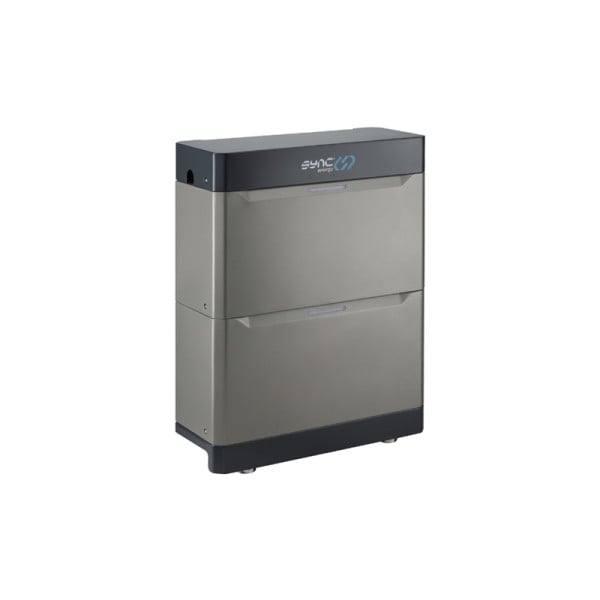
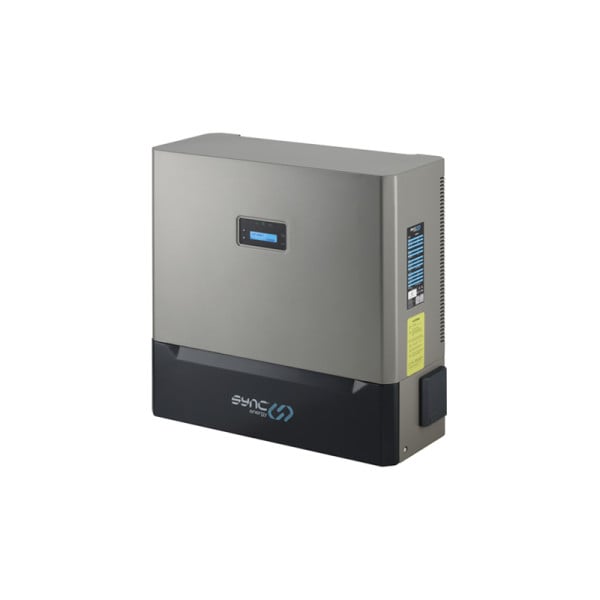
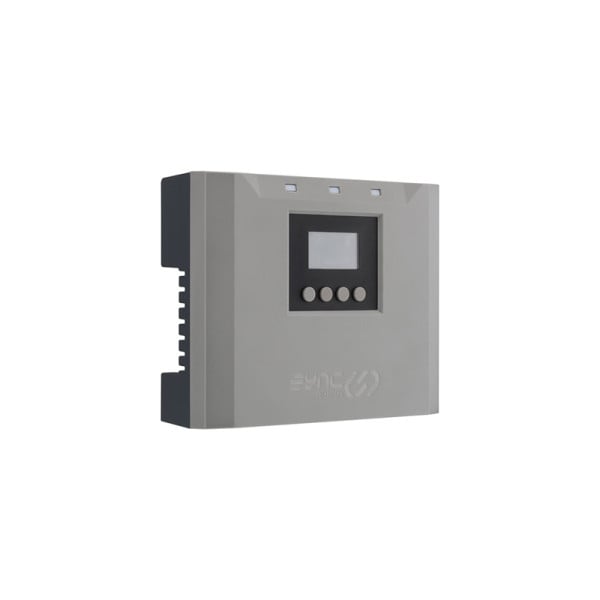
The Sync Energy Flow range is modular, solar-ready and available with either a 3.6kW or 6kW hybrid inverter. It can be used with or without solar panels, allowing homeowners to store cheaper off-peak electricity and use it later during more expensive periods.
The important point is to understand the difference between kW and kWh. The inverter rating, measured in kW, controls how quickly the system can charge or discharge. The battery capacity, measured in kWh, controls how much energy can be stored.
For most new installations, I would start by comparing these two all-in-one systems:
For installer-led modular builds, the inverter and battery stack can also be ordered separately:
For a direct Tesla Powerwall-style alternative, I would focus on the 6kW All-in-One system with 15.4kWh battery capacity. The 3.6kW version is useful as an entry-level model, but it is not the best comparison against Powerwall 3 because the inverter output is much lower.
This is one of the most important buying decisions.
A 3.6kW inverter can discharge up to 3.6kW at a time. That may be enough for general background usage, lighting, refrigeration, TVs, computers and smaller household loads. It can still reduce grid import, but if the home suddenly uses more than 3.6kW, the extra demand will come from the grid.
A 6kW inverter gives much stronger support for larger household loads. For homes with electric heating, tumble dryers, ovens, kettles, air conditioning, or multiple appliances running at once, 6kW is usually the more realistic option.
The Tesla Powerwall 3 has a higher discharge capability than both Sync Energy Flow options, with UK output options up to around 11.04kW. That is one of Tesla’s big advantages.
However, the question is whether the extra output is worth the extra cost. For many homes, a 6kW Sync Energy Flow system may offer a better balance between usable battery capacity, inverter power and price.
Important: adding more batteries increases the amount of energy you can store, but it does not increase the inverter output. A 3.6kW system with more batteries is still limited by the 3.6kW inverter. For higher-usage homes, the 6kW system is the better starting point.
My Tesla Powerwall 3 installation cost £7,719 excluding VAT. VAT was not charged on my installation.
Using current Expert Electrical pricing, an alternative modular Sync Energy Flow setup could be:
That gives a combined equipment cost of:
£1,101.81 + £3,499.83 = £4,601.64 excluding VAT
This does not include installation, electrical materials, certification, DNO requirements or any additional accessories, so it is not a full installed comparison. But it does show why alternative battery systems are worth considering. The hardware cost can be significantly lower than a Tesla Powerwall 3.
For customers who want a complete kit rather than separate modular components, the 6kW Sync EV Flow All-in-One Battery Storage System is the cleaner product to compare against Tesla Powerwall 3.

A solar diverter is not automatically required for a battery storage installation.
The core system is the hybrid inverter and battery storage. The inverter allows the battery to charge and discharge, and it also enables solar PV integration where the system is designed for it.
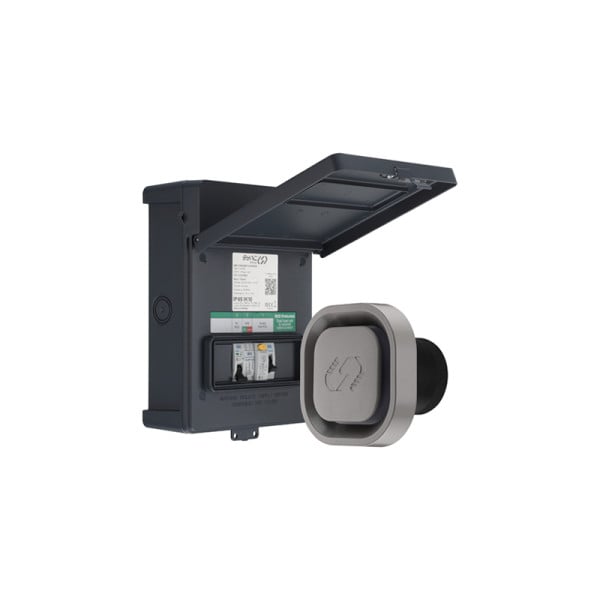
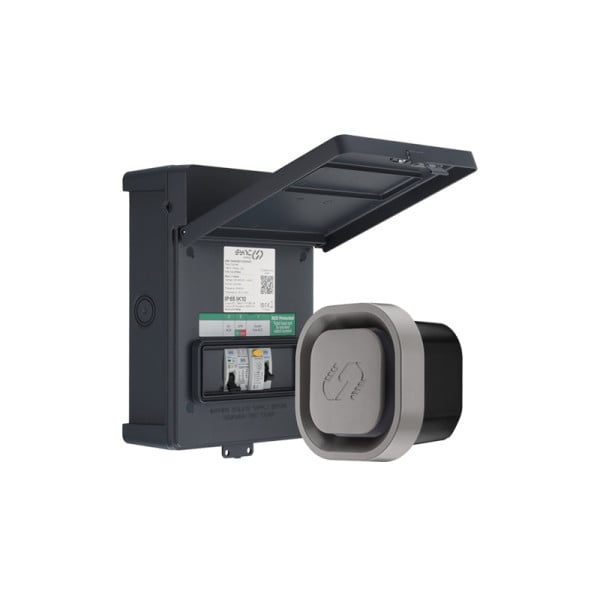
The BG Sync EV Flow Solar Power Diverter is an optional accessory for customers who want to divert surplus solar energy to hot water, battery storage or EV charging.
In many homes, the better financial priority is to use solar energy directly in the home or store it in the battery for later. Diverting surplus solar into hot water can make sense in some cases, but if the property already heats water cheaply with gas, the saving may be limited.
This is why I would choose the right inverter and battery capacity first, then only add a solar diverter if the usage data shows regular surplus solar energy and a clear use for it.
This depends on whether the battery is sold as a supply-only product or supplied and installed as part of a qualifying domestic energy-saving installation.
For a supply-only retail product, VAT will usually be charged at the standard rate. For a qualifying domestic installation, electrical battery storage may qualify for zero-rated VAT under the current energy-saving materials rules.
This is worth checking before ordering because it can make a major difference to the final installed cost.
The Tesla Powerwall 3 is a clever and powerful battery system. Technically, I like it. The app is excellent, the installation is neat, and it is ready for solar.
But financially, without solar, it has not yet been a good investment for me.
The battery gave me access to a useful off-peak tariff, but the system did not save enough to cover the monthly finance payment. Export payments were lower than expected, the export rate dropped from 15p to 12p, and external scheduling meant some settings kept reverting in a way that did not maximise my own savings.
The most important lesson is this:
A battery without solar can help reduce peak-rate usage, but it does not automatically pay for itself.
For high-usage homes, especially with electric heating, the numbers need to be checked carefully. A battery should be sized and configured around real usage, real tariff rates, and realistic payback calculations.
Yes, but with conditions.
I would recommend battery storage as part of a complete home energy plan, especially if you are adding solar panels or an EV charger. I would be more cautious about recommending a premium battery-only system purely for grid charging and export arbitrage.
If you want maximum power output, premium app control and a solar-ready system, Tesla Powerwall 3 is still one of the strongest options.
If you want a more cost-effective alternative, the Sync Energy Flow battery storage buying guide is worth serious consideration. For many homes, a 6kW inverter with a 15.4kWh battery stack may offer a more practical balance of performance and price.
My Powerwall 3 may still become a much better investment once solar panels are installed. That is the next stage I am looking into.
For now, the honest 1-year review is simple: without solar, the Powerwall 3 has not saved enough money to justify the cost on its own.
It is a powerful system, but the financial return depends heavily on how it is controlled, how much energy the home uses, whether export is enabled, and whether solar or an EV charger is added later.
If you are considering battery storage, do not just look at the battery capacity. Look at the full system cost, the inverter output, your tariff, your daily usage, your winter heating demand and whether solar is part of the plan.
That is where the real payback calculation starts.