
403 Forbidden
ERR_WEB_NGX_403

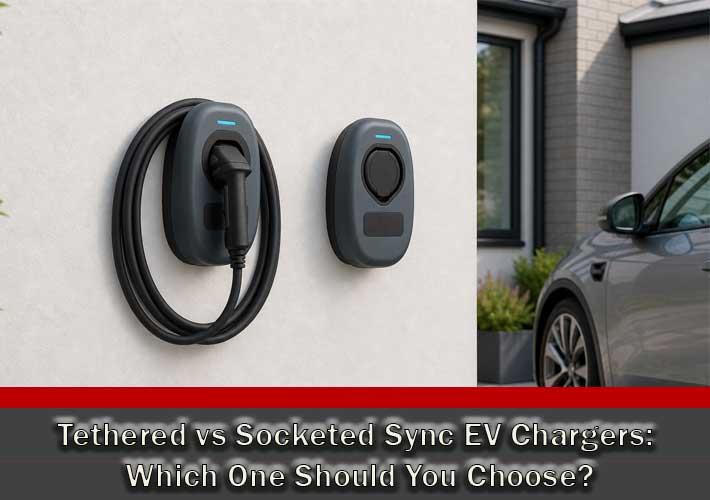
If you’re looking at the BG Sync EV charger range, one of the first choices to make is whether to go for a tethered charger or a socketed version. Both offer smart home charging, but the best option depends on how you use your driveway, where your car is parked and how tidy you want the setup to be.
A tethered EV charger comes with the charging cable permanently attached. The BG Sync EV tethered model includes a Type 2 plug with a 7.5 metre cable, which is longer than many standard tethered EV charger cables.
That extra cable length is a useful advantage if your parking space is awkward, you reverse onto the drive one day and drive in forwards the next, or the charging port on your vehicle is not always close to the charger.

The tethered version is the most convenient option for everyday charging. You simply unwind the cable, plug in and start charging. There is no need to get a separate cable out of the boot each time.
A socketed EV charger does not have a fixed charging cable. Instead, you plug your own Type 2 charging cable into the charger when needed.
This can be a good option if you prefer a cleaner-looking charger on the wall, want to use different cable lengths, or already have a suitable charging cable for your vehicle.

The socketed version is a neat and flexible choice. It keeps the charger looking more discreet when not in use and gives you the freedom to use your own cable.
For most home users, the tethered Sync EV charger will be the easier everyday option. The included 7.5 metre cable is a strong selling point, especially if your driveway layout is not perfectly positioned next to the charger.
If you want the neatest possible look, or you prefer to store your cable separately, the socketed Sync EV charger may be the better choice.
Both versions offer smart functionality through the Sync Energy app, up to 7.4kW charging, built-in safety features and no requirement for an earth rod thanks to integrated open PEN conductor protection.
Yes. The tethered Sync EV charger comes with a 7.5 metre Type 2 cable, which gives more reach than many standard home EV charger cables.
Tethered is usually better for convenience because the cable is always ready to use. Socketed is better if you want a tidier look or prefer using your own cable.
The Sync EV charger uses Type 2 charging, which is the standard connection for most modern electric vehicles in the UK.
No. The BG Sync EV range includes integrated open PEN conductor protection, so an earth rod is not required in typical installations.
Yes. The charger works with the Sync Energy app and includes smart functionality such as tariff management, app control and over-the-air updates.