
403 Forbidden
ERR_WEB_NGX_403

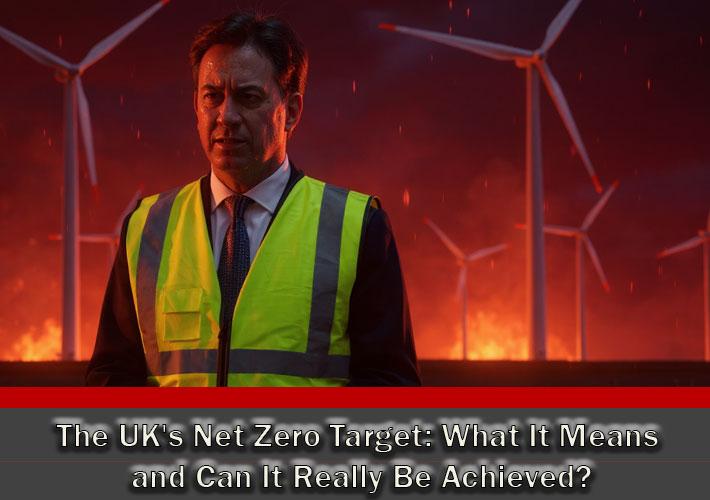
With one of the most ambitious climate targets globally, the UK plans to cut emissions by 68% by 2030 and reach net zero by 2050, effectively neutralising its carbon emissions. But what exactly does "net zero" mean, why does it matter, and is this goal realistic? Below, we explain the net zero concept, outline the UK's strategy and progress, and discuss whether hitting net zero by 2050 is feasible, including where it might work well and where challenges remain.
Net zero refers to balancing the greenhouse gases we emit with those we remove from the atmosphere. In other words, any carbon emissions produced are effectively canceled out by an equivalent amount of carbon removed (for example, through forests or carbon-capture technology), as explained by the National Grid. Achieving net zero doesn’t mean absolutely no emissions; it means drastically reducing emissions and then offsetting any hard-to-avoid remainder. For instance, if certain industries or agriculture still emit a small amount by 2050, those could be balanced by planting trees or using carbon capture so that total emissions minus removals equal zero – a scenario outlined in the UK Government’s Net Zero Strategy.
This approach is different from simply being “carbon neutral” through offsets alone. Net zero prioritises cutting emissions outright as much as possible and uses offsets only as a last resort.
If you're new to the topic, the video below provides a quick explainer on what net zero means and why it's important for the UK.
Scientists and governments agree that net zero by mid-century is crucial to limit global warming. Carbon dioxide and other greenhouse gases trap heat in the atmosphere, causing climate change. The Earth has already warmed about 1.2°C above pre-industrial levels, leading to more extreme weather – even in the UK we're seeing severe floods and heatwaves, as outlined in the Net Zero Strategy.
If warming exceeds 1.5°C, scientists warn of far worse effects: more frequent and intense floods, wildfires, crop failures, and rising sea levels. These effects could even trigger tipping points such as permafrost thawing that releases massive CO₂ stores, which in turn accelerate climate change further.
The good news is that avoiding these outcomes is still possible. The latest science suggests global emissions must be cut to near zero by 2050 to halt further warming. This requires rapid action across countries and sectors. Every tonne of CO₂ we don’t emit helps. As the National Grid summarises: “Action taken to limit emissions in the next decade will be critical to the future.”
The UK was the first major economy to make net zero legally binding by 2050. It has also committed to cut emissions by 68% by 2030 and 78% by 2035, compared to 1990 levels (House of Commons Library).
The Net Zero Strategy lays out key areas for decarbonisation:

UK emissions are down nearly 50% from 1990 levels. Coal now supplies less than 2% of electricity, and renewables provide over 40%, according to government data. The UK decarbonised faster than any other G7 country between 2010 and 2020.
Importantly, the economy has continued to grow — on paper. UK GDP increased by around 75% during the same period emissions fell, suggesting that decarbonisation and economic growth can, in theory, go hand in hand. However, much of this growth has come from a shift away from manufacturing toward services such as finance, technology, and professional sectors. While this has reduced industrial emissions, it also means the UK now relies more heavily on imports — including manufactured goods and materials, which carry their own carbon footprint. Meanwhile, key domestic sectors like transport and heating still lag behind. Transport alone accounts for around 27% of UK emissions, mostly from cars and vans (Wikipedia).

This raises an uncomfortable truth: while the UK reduces its territorial emissions, it still relies heavily on imported goods — many of which are manufactured in countries like China, where coal remains a dominant energy source. These goods, from electronics to clothing and even solar panels, are then shipped thousands of miles (5,994 miles to be precise) aboard diesel-fueled container ships. In effect, the emissions are outsourced rather than eliminated.
From a planetary perspective, this risks undermining the intent of net zero. If emissions are simply displaced overseas — and potentially increased due to dirtier energy mixes — then the global environmental benefit is questionable. It highlights a critical flaw: net zero accounting focuses on emissions produced within a country’s borders, not on the full lifecycle or global impact of its consumption.

The UK is responsible for around 1% of current global CO₂ emissions, but historically contributed a much higher share due to its early industrialisation — roughly 3% of all cumulative emissions since 1850. While the UK has significantly reduced its domestic emissions, it remains a major consumer of carbon-intensive goods manufactured abroad, meaning its indirect impact on global emissions is higher than headline figures suggest. This chart shows how the UK and Germany are valiantly reducing their CO₂ emissions because they're manufacturing less while sourcing anything they can from China because its cheaper. If saving the planet is the aim, it could actually harm it further.

The UK’s transition to net zero is intended to reduce domestic emissions and eventually improve energy security by expanding wind, solar, and nuclear capacity. However, at present, the UK still imports a significant portion of its energy — including gas from Norway and LNG (iquefied Natural Gas) from countries like Qatar and the U.S., as well as electricity through interconnectors with France, the Netherlands, and others. Moreover, many wind turbines and solar panels are manufactured overseas. While net zero may reduce some local environmental impacts, the UK continues to consume imported goods and energy produced using fossil fuels abroad. Unless global supply chains also decarbonise, the overall effect on planetary emissions remains limited — raising questions about how meaningful one country’s net zero efforts are without broader international alignment.
Immigration is rarely discussed in mainstream climate policy, yet population growth has direct implications for energy demand, housing, transport, and long-term emissions. Net migration to the UK was estimated at around 685,000 people in 2023 according to the Office for National Statistics (ONS). With average UK emissions currently at approximately 5.3 tonnes of CO₂ per person per year, this could theoretically add over 3.6 million tonnes of CO₂ annually — unless mitigated through low-carbon infrastructure and sustainable planning.
While CO₂ emissions are a global problem, there’s an inherent contradiction in trying to reduce emissions per capita while simultaneously increasing the population base. The UK’s net zero strategy largely focuses on decarbonising sectors like power, transport, and buildings — but doesn’t explicitly address how long-term population trends could impact progress.
Some suggest that measures like building low-carbon homes, investing in clean public transport, and expanding renewables must accelerate in line with population growth. For example, if offsetting 1 person's emissions hypothetically required 50 mature trees, then absorbing the CO₂ impact of 600,000 new residents would require planting around 30 million trees — or more than 80,000 per day, an obviously impractical scale. These comparisons highlight the need for realistic planning and open discussion.
Ultimately, population growth — whether from natural increase or migration — needs to be integrated into national carbon modelling, land use planning, and energy policy. Without it, the UK risks underestimating future demand and overestimating the impact of its current climate actions.

Yes – but only with strong, sustained effort and careful policy implementation. The UK’s independent Climate Change Committee (CCC) believes the 2050 target is feasible, estimating the long-term cost at around 0.2% of GDP per year (which equates to £4.6 billion per year) – far less than the economic damage caused by unchecked climate change (Carbon Brief).
However, the global impact of the UK achieving net zero depends on more than just domestic emissions cuts. The UK accounts for roughly 1% of global CO₂ emissions, but that figure only includes emissions generated within UK borders. In reality, much of the UK's carbon footprint is "offshored" – we consume goods that are manufactured abroad (often in coal-heavy economies like China or India), then shipped to the UK using diesel-fueled transport. These emissions aren’t counted in UK totals, but they still contribute to global warming.
So, while the UK may technically meet its climate targets on paper, the planet-wide effect could be limited if we continue importing high-emission goods and materials. It’s essentially shifting the CO₂ rather than cutting it. This highlights a core tension in net zero policies: domestic reductions don’t always equal global reductions unless supply chains and consumption patterns are addressed too.
If done properly, however, the UK’s path to net zero can still be a powerful global signal. As one of the world’s largest historic emitters and a former industrial superpower, the UK can help set standards, pioneer clean technologies, and influence international climate policy. Net zero at home gives the UK more credibility when calling for stronger action abroad.
But to truly reduce its climate impact, the UK must also:
Encourage low-carbon supply chains and traceable imports.
Invest in green shipping and logistics.
Support international decarbonisation through finance and technology sharing.
In short: achieving net zero will help, but how the UK gets there matters just as much as the fact that it does.

Proven solutions like wind and EVs are already in use. Others – such as zero-carbon aviation and hydrogen for heating – need more development. Encouragingly, costs of solar, wind, and battery storage have dropped 80–90% in the past decade.
The UK has policies, but not all are funded or implemented yet. Only one-third of the 2030 target is currently backed by robust plans. Scaling up requires trained workers, better supply chains, and consistent government leadership.
Public buy-in is crucial. Households need help with upfront costs for EVs or heat pumps. The government has adjusted timelines to make the transition affordable, aiming to protect low-income households with grants and incentives.
The UK currently contributes about 1% of global CO₂ emissions, which may seem small in isolation. However, this figure doesn't tell the full story. Historically, the UK was one of the largest contributors to cumulative global emissions due to its early industrialisation — a legacy that still carries weight in international climate discussions.
By taking ambitious climate action today, the UK aims to lead by example, showing that a modern economy can grow while cutting emissions. This can influence global standards, encourage innovation, and boost the credibility of international climate diplomacy. The UK's legal net zero commitment, adopted in 2019, was one of the first of its kind and helped set a precedent for other nations.
Currently, over 80% of the world’s GDP is covered by countries with net zero pledges, including major emitters like the EU, the US, and China (albeit with differing timelines). The UK’s role, while limited in direct emissions, is significant in shaping global climate ambition — especially through its research, green finance sector, and international platforms like COP summits.
That said, critics argue that the UK is offshoring emissions by importing carbon-intensive goods from countries like China and India, where coal still dominates energy generation. So while domestic emissions fall, global emissions may not — unless supply chains and consumption habits are addressed. This highlights the need for a global accounting approach to emissions, not just national targets.
Despite North Sea oil and gas once fueling much of the UK, production has steadily declined and reserves are diminishing. As of end-2023, the UK Continental Shelf holds approximately 3.3 billion barrels of oil equivalent in proven and probable reserves, and only limited further resources remain viable for development. Without new exploration — which the government has largely restricted — the basin could run dry in just over a decade. As a result, the UK is shifting to imports: today, over two-thirds of its gas is bought from abroad, primarily Norway. This raises a critical contradiction: while the UK aims to meet net zero, it is effectively phasing out domestic fossil fuel production while importing carbon-intensive energy — potentially undermining the global emissions reductions Net Zero seeks to achieve.

Net zero doesn’t mean eliminating all emissions – it means cutting them drastically and offsetting the remainder. Power generation is well on the way. Heating, industry, and agriculture are harder and may require engineered solutions like carbon capture or tree planting.
The UK has shown that progress is possible. Continued investment, innovation, and fair policy will be essential. As the National Grid says: “Each one of us has a role to play in building a sustainable future.”
A traditional full English breakfast – typically made with sausages, bacon, eggs, baked beans, toast, mushrooms, and tomatoes – has a carbon footprint of around 4.2 kg of CO₂e per serving. The bulk of these emissions come from the meat components, particularly sausages and bacon, due to methane from livestock and energy-intensive farming practices. Eggs and dairy also contribute, while plant-based items like tomatoes and beans add less.
To put this into perspective, eating one full English breakfast produces more carbon emissions than driving a petrol car for about 10 miles. While it’s a British classic, regularly consuming high-carbon meals like this can significantly increase your dietary impact on the climate.

Eating one full English breakfast per week (at 4.2 kg CO₂e) adds up to 218 kg of CO₂e per year — you'd need to plant about 11 trees to offset that annually, just to cover one person's needs.