
403 Forbidden
ERR_WEB_NGX_403

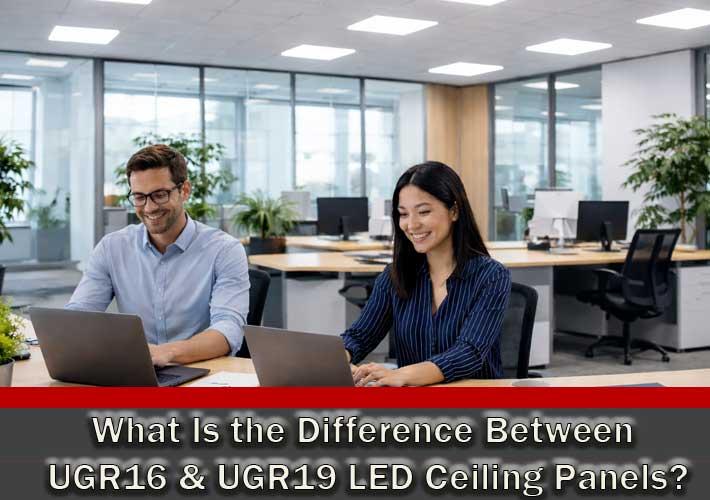
The difference between UGR16 and UGR19 lies in the level of glare control provided and the type of environment each rating is best suited to. Both are classified as low-glare lighting solutions, but they represent different points on the visual comfort spectrum and are selected based on how visually demanding a space is.
UGR stands for Unified Glare Rating. It is a term used in commercial lighting design to describe how much visual discomfort glare a lighting installation produces within an indoor space. UGR is most commonly used when specifying lighting for schools, offices, healthcare buildings, and other commercial environments where visual comfort is important. Lower UGR values indicate better glare control and a more comfortable lighting environment.
UGR19 is widely regarded as the point at which lighting delivers an appropriate level of glare control for most commercial and educational environments. It represents the upper limit of acceptable glare and is often described as the boundary between visual comfort and discomfort. When a lighting scheme is correctly designed, UGR19-rated luminaires provide sufficient visual comfort for prolonged screen use, reading, and general office tasks, helping to reduce eye strain and visual fatigue over the working day.
Because of this balance between performance and comfort, UGR19 has become the industry standard for offices, classrooms, libraries, and meeting rooms, where lighting must be effective without being visually intrusive. UGR >19 is designed to comply with BS EN 12464-1 lighting of workspace.
UGR16 goes a step further by offering enhanced glare suppression. This rating is typically specified in environments where visual demands are higher and even small amounts of glare could negatively affect concentration, accuracy, or wellbeing. Examples include design studios, laboratories, healthcare settings, and spaces where precision work or extended visual focus is required. This is often referred to as ultra low-glare.
The result of UGR16 lighting is a noticeably calmer visual environment, with reduced brightness at high viewing angles and minimal perceived glare from the luminaires. While the difference between UGR16 and UGR19 may appear small numerically, it can be perceptible in practice, particularly during long periods of screen-based or detailed work.
| Feature | UGR16 | UGR19 |
|---|---|---|
| Glare control | High level of glare control with minimal discomfort | Appropriate level of glare control for most spaces |
| Visual comfort | Very high visual comfort, even for demanding or precision tasks | Acceptable comfort; the boundary between comfort and discomfort |
| Typical applications | Design studios, laboratories, healthcare, technical and precision environments | General offices, schools, libraries, meeting rooms |
The choice between UGR16 and UGR19 should always be based on the visual task being performed and the expectations of the space. UGR16 is best suited to environments where concentration, clarity, and visual comfort are critical, while UGR19 remains the preferred and most widely specified option for general-purpose commercial lighting where comfort and efficiency must be carefully balanced.
UGR22 represents a noticeably higher level of glare than UGR19 and is generally considered unsuitable for prolonged visual tasks or screen-based work. While it may still be acceptable in spaces with short occupancy or low visual demand, it sits beyond the comfort threshold typically recommended for offices and classrooms.
UGR22 is more commonly associated with areas such as corridors, circulation spaces, storage areas, plant rooms, or industrial environments, where lighting is functional rather than task-focused and occupants are not required to concentrate for long periods.
Beyond UGR22, higher UGR values (such as UGR25 or above) indicate increasing levels of discomfort glare and are rarely specified in occupied commercial interiors. These ratings are generally limited to warehouses, factories, or service areas where glare control is not a primary concern.
In practice, most commercial lighting specifications focus on UGR16 and UGR19, as these ratings align with the visual comfort requirements of offices, education, healthcare, and other people-focused environments.
For most offices, UGR19 is the recommended and widely accepted glare rating. It provides an appropriate level of glare control for screen-based work, reading, and general tasks without causing eye strain. UGR19 is commonly specified as the maximum allowable glare level in office lighting standards. For premium offices or spaces with intensive screen use, UGR16 may be preferred.
Classrooms are typically designed to UGR19, which offers good visual comfort for reading, writing, and screen use. In classrooms where students spend long periods concentrating, or where visual clarity is especially important, UGR16 can be used to further reduce glare and create a calmer learning environment.
UGR16 is not “better” in all cases, but it does provide higher glare control than UGR19. It is best suited to visually demanding environments such as design studios, laboratories, or healthcare spaces. For most offices and classrooms, UGR19 is sufficient and more commonly specified.
When correctly designed and installed, UGR19 lighting should not cause discomfort glare for most users. However, glare can still occur if luminaires are poorly positioned, installed too low, or used in rooms with highly reflective surfaces. UGR depends on the whole lighting layout, not just the fitting.
Yes, most commercial LED ceiling panels are designed to meet a specific UGR target, commonly UGR<19. Some higher-spec or architectural panels are available with UGR16 for enhanced visual comfort. The stated UGR assumes correct spacing, mounting height, and room conditions.
UGR is most commonly applied to ceiling panels, but it can also apply to downlights and linear fittings. Low-glare downlights often use deeper recessing or glare-control accessories to reduce discomfort. In commercial environments, downlights are typically designed to achieve UGR19 where glare control is required.
Not exactly. UGR is a measure of the entire lighting installation within a specific room, not a fixed property of one fitting. A luminaire described as “UGR<19” is designed to help achieve that rating when used correctly, but the final result depends on layout, room size, reflectance, and viewing angles.


