403 Forbidden
ERR_WEB_NGX_403

Surge protection protects an electrical installation from sudden, short-duration increases in voltage known as transient overvoltages. These spikes can occur in a fraction of a second and are most commonly caused by lightning activity (direct strikes or nearby induced surges) or switching events on the electricity network and within large electrical systems.
Although they last only microseconds, these voltage spikes can reach thousands of volts and cause immediate or cumulative damage to consumer units, boilers, EV chargers, LED lighting, IT equipment and other sensitive electronics. Surge Protection Devices (SPDs) work by safely diverting excess voltage to earth before it can damage connected equipment.
Each type of SPD is designed and tested for a different level of surge energy and installation position within the electrical system. Type 1 devices are built to handle the very high currents associated with direct lightning strikes entering the installation. Type 2 devices protect against indirect lightning effects and switching surges within the electrical network. Type 3 devices provide a final stage of protection for sensitive electronic equipment at the point of use. Using the correct type in the correct location ensures surges are safely managed in stages throughout the installation.
Type 1 SPDs are installed as close as practicable to the origin of the installation (service intake/main distribution point) in accordance with 534.4.1.1 of the 18th Edition Wiring Regulations. They are typically specified where lightning current could be introduced into the electrical installation, such as buildings with external lightning protection systems, overhead supply lines, or structures located in exposed locations – for example, where a building has an external lightning protection system (LPS), or where the supply arrangement presents a higher direct lightning risk.
A Type 1 SPD is commonly used as part of a coordinated scheme with a downstream Type 2 SPD to further limit residual overvoltage. (A combined unit such as the FuseBox SPDCUKITT1 kit shown below provides Type 1, 2 & 3 protection in one device.)

A Type 2 Surge Protection Device (SPD) protects an electrical installation from transient overvoltages caused by indirect lightning strikes and switching surges on the electricity network. In most UK homes and commercial buildings, a Type 2 SPD is installed inside the consumer unit or distribution board to limit voltage spikes and protect connected equipment.
Type 2 SPDs are the most common choice for domestic and light commercial installations. They’re typically installed in the consumer unit/distribution board and are designed to protect against transient overvoltages from indirect lightning effects and switching events.

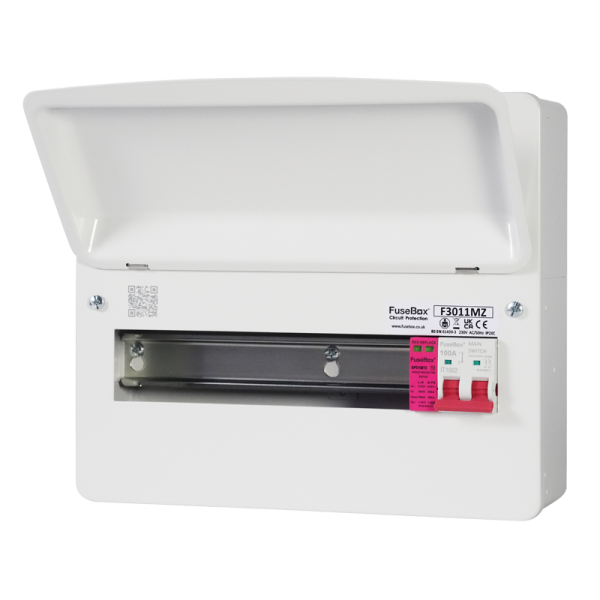
For many UK installations without an external LPS and with lower exposure, a Type 2 SPD at the consumer unit is the primary layer of protection. For example, the FuseBox SPD1MT2 shown above. This is the same pink coloured SPD that comes factory fitted inside the latest FuseBox F3 SPD boards. Which saves an extra useable way is it no longer requires MCB protection.
In most modern UK installations, a Type 2 SPD is installed directly inside the consumer unit. Many new boards now come with factory-fitted surge protection or allow an SPD module to connect directly to the busbar.
This arrangement protects all final circuits in the installation from transient overvoltages caused by lightning activity or switching events on the electricity network.
For example, many modern FuseBox SPD consumer units include built-in surge protection as standard.

Type 3 SPDs are installed close to sensitive equipment (often as surge-protected socket outlets or extension leads). They provide a final stage of protection by further limiting overvoltage at the equipment terminals, but they have a lower discharge capacity and are intended to be used downstream of Type 2 protection as part of a coordinated approach.
For best performance, keep connection lengths short and follow manufacturer guidance on layout and coordination.
The selection and installation of SPDs is covered in BS 7671 Section 534, including guidance on device selection, voltage protection levels and correct connection of surge protection devices.
Each type of SPD is tested using specific surge waveforms that simulate the type of electrical disturbance it is designed to handle.
These standardised test waveforms ensure SPDs are capable of safely managing the type of surge energy expected at their installation point.
For installations requiring full surge protection at the origin, the FuseBox SPDCUKITT1 provides coordinated Type 1, Type 2 and Type 3 protection in a single 36mm (2-module) device. Supplied complete with a 63A B-curve MCB and 16mm² connecting cables, it’s designed for installation as close as possible to the origin of the electrical installation in line with BS 7671 Section 534 .
The device is rated for 25kA total lightning impulse current (10/350µs) and offers voltage protection levels of <1.25kV (L-N) and <1.5kV (N-PE), making it suitable where lightning current protection and transient overvoltage protection are both required . It uses MOV technology (L-PE) and a GDT spark gap (N-PE) for coordinated performance .
Designed for TN-C-S, TN-S and TT systems, it mounts on a standard 35mm DIN rail and features a visual status indicator (Green = OK, Red = Replace) for easy maintenance checks .
Combined SPDs are particularly useful in installations where lightning exposure risk is higher, such as rural buildings, properties near tall structures, or installations without a dedicated external lightning protection system.
The principles are the same, but three-phase systems require SPDs that protect all live conductors and neutral as applicable. For example, the FuseBox SPDCUKITT2TPN kit is designed for FuseBox three-phase distribution boards, covering L1, L2, L3 and N (with a matching three-pole MCB for isolation). Or you can purchase a three phase board with a built-in SPD, which are available in 3 to 15 triple pole ways.


SPDCUKITT2TPN
As with single-phase systems, if the site conditions indicate higher lightning current influence, a suitable Type 1 SPD arrangement for three-phase should be specified at the origin and coordinated with downstream protection.
For installations where space is limited — or where surge protection is preferred upstream of the consumer unit — the FuseBox Meter Supply Isolator with Surge Protection Device (Main Switch) offers a neat alternative.

This unit combines a main isolator switch with integrated surge protection in one enclosure, positioned between the meter and the consumer unit. By installing protection at this point, transient overvoltages can be limited before they reach the distribution board, helping protect the entire installation from the supply side.
It’s particularly useful in:
As with all SPDs, correct installation location, earthing arrangement, and compliance with BS 7671 are essential.
A Type 2 SPD at the consumer unit is the standard foundation for surge protection on many UK installations. Add Type 1 where lightning current influence is a realistic concern (e.g., external LPS), and use Type 3 near sensitive equipment for additional limitation where needed. Always ensure devices are correctly coordinated and installed to current standards and manufacturer instructions.
For further reading and product options, visit our Surge Protection Devices section or see our guide on choosing surge protected consumer units.
No. SPDs do not prevent lightning strikes. Their job is to limit the overvoltage that can enter the electrical installation following a lightning event (direct or nearby) or switching disturbance. They divert excess energy safely to earth to reduce the risk of damage inside the installation.
Under BS 7671 (18th Edition, as amended), surge protection must be considered for all installations. In most cases, an SPD is required unless the installation owner formally accepts that protection is not necessary and the risk is considered tolerable. In practice, SPDs are now standard in new domestic and commercial consumer units.
No. SPDs perform a completely different function.
They work together as part of a coordinated protection strategy.
SPDs are connected in parallel with the supply, so if they activate during a surge event, they do not normally interrupt power to final circuits. If the device reaches end of life, the visual indicator will show it needs replacement, but the installation will usually remain energised.
In many typical UK domestic installations without an external lightning protection system, a Type 2 SPD at the consumer unit provides suitable protection against the majority of transient overvoltages. However, where lightning current could enter the installation (for example via an external LPS), a Type 1 SPD should also be considered at the origin.
When multiple SPDs are installed, they must be correctly coordinated so each device operates in the correct sequence and shares the surge energy appropriately. Incorrect selection or poor installation layout can reduce effectiveness. Always follow manufacturer guidance and Section 534 of BS 7671.
Not necessarily. While overhead lines can increase lightning exposure risk, transient overvoltages can still occur on underground supplies due to network switching events or distant lightning activity. That’s why SPDs are commonly installed even where the supply is buried.
No. SPDs are designed for short-duration voltage spikes. They do not correct sustained overvoltage, undervoltage, power cuts, or frequency issues. They specifically limit transient overvoltages.
Traditionally, many Type 2 SPDs were installed with a dedicated MCB to provide backup protection and isolation.
However, some newer designs — such as the latest FuseBox single-module Type 2 SPD (direct-to-busbar) — are engineered to connect straight onto the consumer unit busbar and do not require a separate MCB. This simplifies installation, saves space, and reduces wiring length, which can improve performance when installed correctly.
Modern homes contain far more sensitive electronics than ever before — from TVs and broadband routers to boilers, EV chargers and LED lighting. While power surges only last a fraction of a second, they can still damage or gradually weaken these devices.
A Surge Protection Device (SPD) helps protect your home by limiting sudden voltage spikes caused by lightning or disturbances on the electricity network. In most new consumer units installed today, an SPD is now standard. We cover this question in more detail, in our to surge or not to surge article.