
403 Forbidden
ERR_WEB_NGX_403

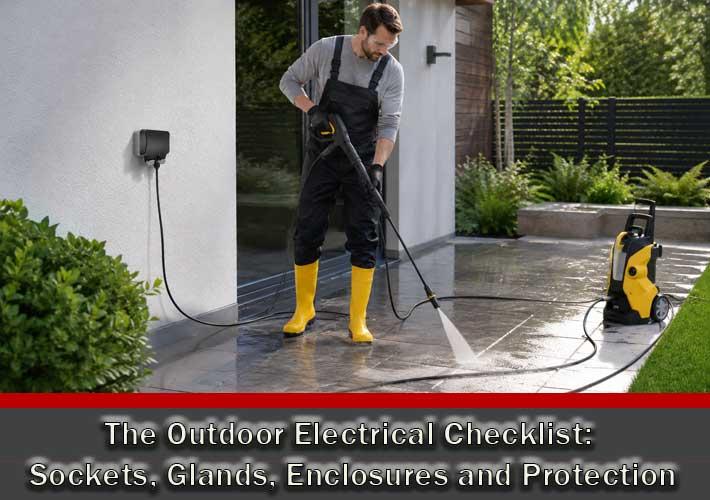
Outdoor electrical work is a regular part of summer installation season. As gardens, patios, garages, sheds and outdoor buildings get more use, customers often need extra power, better lighting control, safer connections and weatherproof equipment that can stand up to harsh British conditions.
Whether you are installing a garden socket, supplying power to a shed, connecting outdoor lighting or upgrading a garage circuit, the key is to choose products that are suitable for external use. Outdoor installations need more than standard accessories; they need the right IP rating, correct cable entry, suitable circuit protection and reliable fittings that are designed for damp, dusty or exposed environments.
This checklist covers some of the most useful products to consider before starting an outdoor electrical installation.
Outdoor sockets are one of the most common additions for domestic and light commercial installations. They are ideal for garden tools, pressure washers, patio equipment, outdoor lighting, water features and general plug-in power around the outside of a property.

For standard outdoor power, choose a socket with a suitable IP rating, such as IP65 or IP66 and a robust weatherproof cover. For smarter control, the Lightwave Outdoor Smart 2 Gang Socket IP66 is a useful upgrade. It provides a weatherproof 2 gang outdoor socket with smart control features, making it suitable for customers who want app control, voice assistant compatibility, scheduling and energy monitoring. Lightwave does require the L2 hub which links straight up to your Wi-Fi network, this system is expandable with many other accessories such as relays for floodlights and wireless switches. The system can be quite costly but it offers a wide variety of smart control features for indoors and outdoors.
This type of outdoor smart socket is especially useful for garden lighting, water features, decorative lighting, outdoor appliances and seasonal equipment where the customer wants easier control without constantly switching power manually.
For a more basic, non-smart option brands like Click Aquip or Hamilton Elemento can be used.

Shop outdoor sockets and weatherproof switches
Outdoor connections need to be properly housed and protected. A suitable weatherproof junction box or enclosure helps keep terminations safe, tidy and accessible while protecting them from moisture, dust and impact.

For outdoor lighting, gates, garden buildings and external power supplies, always consider where the connection will be located. A box fitted under a sheltered canopy has different exposure levels compared with one mounted on a garden wall or fence post. The enclosure should be selected for the environment, cable type and number of entries required.
Useful options include:
For smaller outdoor connections, a compact IP-rated connection box can be a cleaner option than using an oversized adaptable box. The Unicrimp Q-Nect 3 Pole 3 Way IP68 Connection Box is designed for outdoor and underground connections, with a high IP68 rating and M16/M20 cable entry options. It is a useful choice for garden lighting, outdoor cable joints, water features and other external wiring where a secure weatherproof connection is needed. This particular enclosure is also supplied with Wago style lever connectors.

For installations with larger wiring requirements, an ABS enclosure provides more internal space for terminations, controls or multiple cable entries. The Wiska IP65 ABS Enclosure is a practical option for outdoor and industrial environments, offering a robust weather-resistant housing for electrical connections, control gear or accessories that need to be protected from dust and moisture. Supplied with a mounting plate, you can easily mount electrical equipment and create your own outdoor rated distribution box.

Shop weatherproof junction boxes and enclosures
Cable glands are a small part of the installation, but they are one of the most important details when working outdoors. The right gland helps secure the cable, maintain the enclosure’s IP rating and reduce the risk of water entering through the cable entry point.
Standard cable glands are useful for flexible cables, outdoor lighting cables and general weatherproof accessories. For armoured cable, SWA glands are required to terminate the armour correctly and provide a secure, professional finish.
For installers who want a reliable gland option for different cable types, SWA Storm cable glands are a strong choice. They are designed as universal glands for various cable types, including SWA, making them a practical option for outdoor electrical work where cable protection and sealing matter.

Armoured cable is commonly used for outdoor power supplies, garages, sheds, workshops and garden buildings. When using SWA cable, the accessories around the cable are just as important as the cable itself.
A neat SWA installation normally requires the correct gland size, shrouds, earth tags, washers, fixings and suitable enclosure entry points. Getting these parts right helps create a safer, more robust installation and avoids messy terminations that can cause problems later.
Popular gland sizes are 20mm small, 20mm, 25mm and 32mm, depending on the cable size and type of accessory being installed. Before choosing the cable and glands, it is worth calculating the expected load requirements in amps, especially for outdoor sockets, sheds, garages, garden offices or equipment such as heaters and power tools. Once the current demand is known, you can select the correct cable size, gland size and enclosure entry to suit the installation.
Shop SWA cable and accessories
Outdoor circuits need suitable electrical protection. External sockets, garden power and outdoor lighting supplies may be exposed to moisture, accidental damage and plug-in equipment, so circuit protection should be considered carefully.
RCDs and RCBOs are commonly used to provide additional protection. RCBOs are especially useful where you want individual circuit protection, helping to reduce the impact of a fault on other circuits. For garage or outdoor sub-mains, an IP-rated or garage consumer unit may also be required depending on the installation. You can order these smaller boards with or without incoming devices and choose your own separately.


Before choosing protection devices, consider the load, cable route, installation method, earthing arrangement and the current wiring regulations. Outdoor electrical work should always be designed and installed by a competent person.
Shop RCBOs, RCDs and circuit protection
Outdoor lighting is more useful when it is controlled properly. PIR sensors, timers and photocells can help reduce wasted energy, improve security and make lighting more convenient for the customer.
PIR sensors are ideal for entrances, driveways, side passages and security lighting where lights only need to come on when movement is detected. Photocells are useful for dusk-to-dawn lighting, while timers give more control over when outdoor lights or equipment are active.

For smart control, products such as the Lightwave outdoor socket can also be used to schedule and manage connected outdoor equipment, depending on the load and installation requirements.
Shop PIR sensors, timers and photocells
Outdoor installations also need the right fixing accessories. Cable clips, screws, plugs, conduit fittings, mounting boxes and seals all help create a neater, longer-lasting installation.

It is worth choosing fixings that suit the surface and the environment. Brick, render, timber, fence posts, metalwork and outbuildings can all need different mounting methods. Small details such as stainless steel fixings, UV-resistant clips and correctly sealed cable entries can make a noticeable difference to the finished job.
Shop cable clips and installation accessories
Before starting an outdoor electrical installation, it helps to check that you have the right products for the job. A typical outdoor install may require:
Outdoor work needs products that are built for the environment. Choosing the right sockets, glands, enclosures and protection from the start helps create a safer, cleaner and more reliable installation.
At Expert Electrical, we stock a wide range of outdoor electrical accessories, including outdoor sockets, cable glands, weatherproof enclosures, PIR sensors and timers, and circuit protection for domestic, commercial and trade installations.
Outdoor electrical fittings should have a suitable IP rating for the location. As a general guide, IP44 may be suitable for sheltered areas, while IP65, IP66 or IP68 products offer greater protection against dust and water. The right choice depends on how exposed the fitting is to rain, spray, dirt and physical damage.
No, standard indoor sockets are not designed for outdoor use. Outdoor sockets should be weatherproof and suitably IP-rated, with a protective cover to help prevent water and dirt from entering the socket when installed correctly.
Outdoor sockets normally require RCD protection because they may be used with portable equipment outdoors, where the risk of electric shock is higher. This protection may be provided by an RCD, RCBO or another suitable protective device such as the main consumer unit which should have this level of protection anyway.
The best cable depends on the installation method and the load required. SWA cable is commonly used for outdoor supplies, sheds, garages and garden buildings because it offers mechanical protection. Other cables such as H07 which is made from rubber is also suitable or you could use conduit to protect other lightweight cables. Before choosing the cable, calculate the expected load in amps and check the cable route, installation method and protective device.
Cable glands help secure the cable where it enters an enclosure, socket or junction box. They also help maintain the weatherproof seal around the cable entry point. Using the wrong gland, or failing to tighten and seal it correctly, can allow moisture into the enclosure.
The gland size depends on the cable diameter and the type of cable being used. Common sizes include 16mm, 20mm, 25mm and 32mm, but the correct size should always be checked against the cable specification, enclosure entry and installation requirements.
Yes, but the installation must be designed correctly. Sheds, garages and garden offices may need their own consumer unit, suitable cable, correct earthing arrangements and RCD or RCBO protection. The expected load should be calculated first, especially if sockets, lighting, heaters or power tools will be used.
A junction box is usually used for making cable connections, while an enclosure provides a larger housing for terminations, controls, relays or protective devices. For outdoor use, both should be suitably IP-rated and chosen to match the cable entries, location and equipment being installed.
Smart outdoor sockets can be useful for controlling garden lighting, water features, seasonal lighting and some outdoor equipment. Always check the socket’s load rating and the equipment being connected. High-demand appliances should only be used if they are within the socket’s rated capacity. Be careful if you're putting a patio heater on a smart socket as you might switch it on accidentally and create a fire hazard. Some smart systems allow you to lock it off.
Outdoor electrical work should be carried out by a competent person. Electrical installations outside the home can involve moisture, buried cables, external sockets, outbuildings and additional protection requirements, so the work should be designed and installed safely in line with current wiring regulations.