
403 Forbidden
ERR_WEB_NGX_403

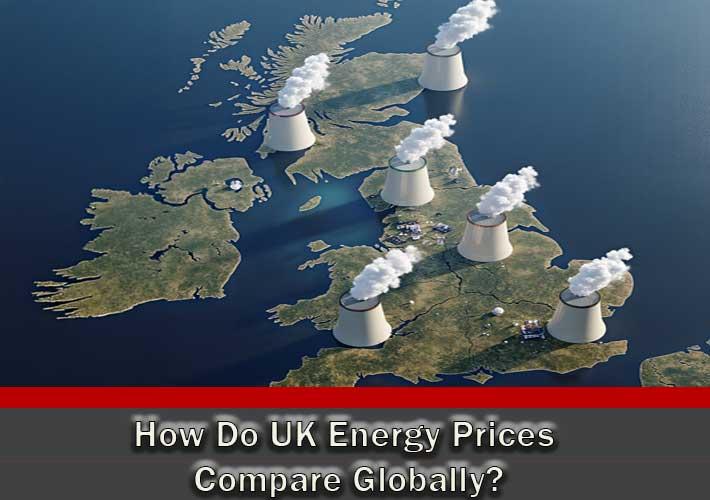
Have you ever looked at your energy bill and wondered: “Is it just us, or is electricity expensive everywhere?” If you’re in the UK, the answer is - it’s not just you. UK households have seen energy prices soar in recent years, but how do those prices stack up globally? Are we truly paying more than other countries? And where does our electricity actually come from?
Based on the most recent data from EDF Energy (March 2025), a standard residential electricity user is charged:

For context, a UK household with a particularly high electricity usage as it uses electric heaters instead of gas central heating has an estimated annual usage of 17101.7 kWh per year would spend approximately £4,529.51 including the standing charge and 5% VAT according to a customers EDF statement. This customer does pay much less for their gas at just £32.57 per month.

According to data from Statista and the International Energy Agency (IEA), the UK is among the more expensive countries for residential electricity:
| Country | Avg. Residential Electricity Price (2024) |
|---|---|
| Germany | ~ €0.40 or 34p/kWh |
| UK | ~24p/kWh (increasing to 28p from April 2025) |
| France | ~€0.29 or 25p/kWh |
| USA | ~15¢ or 12p/kWh - varies in different states |
| India | ~₹6.47 or 6p/kWh |
While we’re not the most expensive (Germany tops the chart), we’re certainly not cheap. The US, by comparison, enjoys much lower prices thanks to a combination of domestic fossil fuel production and lower taxes. Energy costs in the US do fluctuate depending on which state your in.
In the first half of 2024, Germany recorded the highest electricity prices for household consumers in the EU at €0.40 per kWh, followed closely by Ireland, Denmark, and Czechia. In contrast, the lowest prices were found in Hungary (€0.11), Bulgaria, and Malta - all significantly below the EU average of €0.29 per kWh. German households paid around 37% more than the EU average, while the lowest-paying countries paid less than half that amount.

From the Eurostat Website
There are a few key reasons:
The UK generates a significant portion of its electricity using gas-fired power stations. According to EDF’s published fuel mix (April 2023 – March 2024), gas accounts for 19.7% of its electricity, while the national average is even higher at 35%.
When global gas prices spike - as they did during the energy crisis triggered by the war in Ukraine - UK electricity costs also rise sharply.
Even if you use less electricity, the daily standing charge adds a fixed cost. These fees cover infrastructure, grid maintenance, and levies for green initiatives. Some of these levies support renewable projects, while others fund social programs. These are passed on from suppliers to consumers.
Residential customers pay 5% VAT on energy. While that sounds low, energy companies are subject to higher taxes on profits, especially after the 2022–2023 windfall taxes:
Although these taxes are aimed at energy producers, the additional costs will certainly trickle down to the consumer.
EDF’s 2023–2024 fuel mix shows the following breakdown:


This makes EDF one of the lower-carbon suppliers, with only 136g CO₂ per kWh (vs. 171g UK average).
France gets 64% of its energy from nuclear as it has limited natural resources. French consumers widely use electric heating instead of gas powered central heating as they have limited gas supplies. EDF, a French-owned company, sources 54% of its energy from nuclear power for consumption in the UK market.

Pretty much, yes! Most forms of electricity generation rely on one simple concept: boil water, make steam, spin a turbine.
Even some renewables like concentrated solar power (CSP) use mirrors to heat water. But wind turbines and solar PV don’t- they generate electricity mechanically or directly from sunlight, making them exceptions to the “giant kettle” analogy.
Possibly - but it’s complex. The UK government’s focus is on reducing dependence on fossil fuels, expanding nuclear and renewables, and improving energy efficiency. Over time, this could help stabilize or reduce prices, especially if infrastructure upgrades reduce standing charges.
As a consumer, the best you can do is:
For more tips, see our guide on saving energy, which includes real off-peak rate comparisons.
While it might seem logical that businesses pay less due to higher usage, the reality is often the opposite. In many cases, especially for small and medium-sized enterprises (SMEs), business electricity costs can exceed domestic rates.
For example, a recent British Gas bill from January 2025 for a small business (Expert Electrical Supplies Ltd) using British Gas showed:
This resulted in an effective cost of over 27.5p per kWh when accounting for all charges—more than the 24p/kWh paid by households on standard tariffs.
Why the higher cost? Domestic users benefit from the Ofgem energy price cap, which businesses don’t. Business contracts also include extra fees like the Climate Change Levy, and they’re subject to higher VAT. While large firms can negotiate cheaper bulk rates, many SMEs are locked into expensive contracts or default variable rates, especially after the 2022–2023 energy market upheaval.
In short: for many businesses, especially those without in-house energy management or large-scale usage, electricity is a significant and rising expense.
On a global scale, UK business electricity prices are among the highest. Here’s a rough comparison of average industrial rates (converted to GBP/kWh where applicable):
| Country | Industrial Electricity Price (GBP/kWh) |
|---|---|
| UK | ~255p |
| Germany | ~14p–16p |
| France | ~13p–15p |
| USA | ~6p–8p |
| China | ~5p–7p |
In 2024, British businesses are facing some of the highest electricity costs in the world, putting them at a major disadvantage compared to international competitors. While German households shoulder high energy costs, their government has acted to shield businesses. France, meanwhile, benefits from decades of investment in nuclear power, offering far cheaper rates to its industries.
By contrast, UK companies - especially in manufacturing and technology are burdened with soaring overheads, paying almost four times more for energy than businesses in China, and more than three times more than those in the USA. In the global race for competitiveness, these extreme energy costs are a serious handicap. Unless the UK acts to close this growing gap, British industries will continue to struggle against cheaper, better-supported rivals overseas.
The United Kingdom has made significant strides toward achieving net-zero emissions by 2050. A pivotal milestone was reached on September 30, 2024, when the UK's last coal-fired power station, Ratcliffe-on-Soar, ceased operations. This closure marked the end of 142 years of coal-generated electricity in the UK, making it the first G7 nation to eliminate coal power entirely.
This transition was facilitated by a combination of factors, including the implementation of carbon pricing, stringent emissions regulations, and substantial investments in renewable energy sources such as wind and solar power. The UK's commitment to phasing out coal has been instrumental in reducing its power sector emissions by three-quarters over the past decade.
In contrast, China continues to expand its coal power capacity. In 2024 alone, China initiated construction on 94.5 gigawatts of new coal-fired power plants, the highest annual increase since 2015. This equates to approximately two new coal power plants being approved each week. What is the point in the UK closing a coal power station to save the planet when China is polluting it at an exponential rate?

While China has also made significant investments in renewable energy - achieving a combined wind and solar capacity of 1,482 gigawatts by March 2025 - coal remains a dominant energy source. The continued reliance on coal raises concerns about China's ability to meet its climate targets and underscores the challenges of balancing economic growth with environmental sustainability.
While the UK proudly accelerates its transition to renewable energy, particularly solar power, there’s a rarely discussed irony: most of the world's solar panels are manufactured in China — using coal-fired energy. Then they're transported across the world in diesel-powered cargo ships, adding even more emissions before they ever reach British rooftops. In fact, international shipping itself accounts for nearly 3% of global CO₂ emissions, highlighting yet another hidden environmental cost in the journey to "green" energy.

China currently dominates the global solar panel supply chain, producing more than 80% of the world's photovoltaic (PV) panels. The factories powering this boom are often located in regions heavily reliant on cheap coal power. In fact, research shows that producing a solar panel in China can result in up to 30% more carbon emissions than manufacturing the same panel in Europe or North America.
This raises uncomfortable questions: by installing Chinese-made panels, are we simply shifting emissions from British power stations to Chinese factories? While solar panels significantly reduce carbon emissions over their lifespan once installed, the carbon footprint of their manufacture highlights a major supply chain challenge the UK must address if it truly wants to achieve "net zero" with integrity, otherwise the whole system is a farse that will hold back the UK economy.
This is a pressing issue for British industry. High electricity costs make it harder for UK businesses to compete with overseas companies, particularly in energy-intensive sectors like steel, chemicals, and food processing. While some UK firms are offsetting costs by investing in energy efficiency, installing solar panels, or shifting production to off-peak hours, these solutions aren’t always accessible - especially for smaller businesses.
The UK government has launched initiatives like the Energy Intensive Industries (EII) compensation scheme and Climate Change Agreements (CCAs) to help reduce electricity costs for qualifying businesses, but uptake can be complex and limited in scope. If the UK wants to strengthen its global competitiveness, reforming the energy market for businesses - perhaps by removing some levies or fast-tracking grid infrastructure upgrades - could be vital.
Until then, UK businesses must innovate not just in what they make, but in how efficiently they use every kilowatt. While trying to maintain positive a positive outlook as the UK Government bleads businesses for every last penny.
The UK has made bold strides toward decarbonising its energy grid, but consumers and businesses are paying a heavy price. While we can take some comfort in not topping the global energy cost tables, high standing charges, green levies, and punishing taxes on energy producers continue to inflate prices at home. Meanwhile, countries like the USA and China enjoy far cheaper energy, powering their economies with an advantage British businesses can only envy.
What's worse, the very renewable transition we champion is riddled with hidden carbon costs - from Chinese coal-powered solar panel factories to diesel-fuelled cargo ships carrying "green" technology to our shores. The harsh truth is that while UK consumers tighten their belts and businesses struggle to stay competitive, much of the real global pollution problem lies beyond our borders. The UK's ambitious push for clean energy is a hypocritical was of time while its directly fueling China's blatant disregard for the the planet without any consequence.
If the UK wants to remain relevant on the global stage, energy market reform must move beyond slogans. Lowering energy costs, investing in genuine low-carbon infrastructure, and ensuring supply chains are truly sustainable will be essential steps - not just for reaching net zero, but for keeping the lights on in a way that supports both the environment and the economy.